
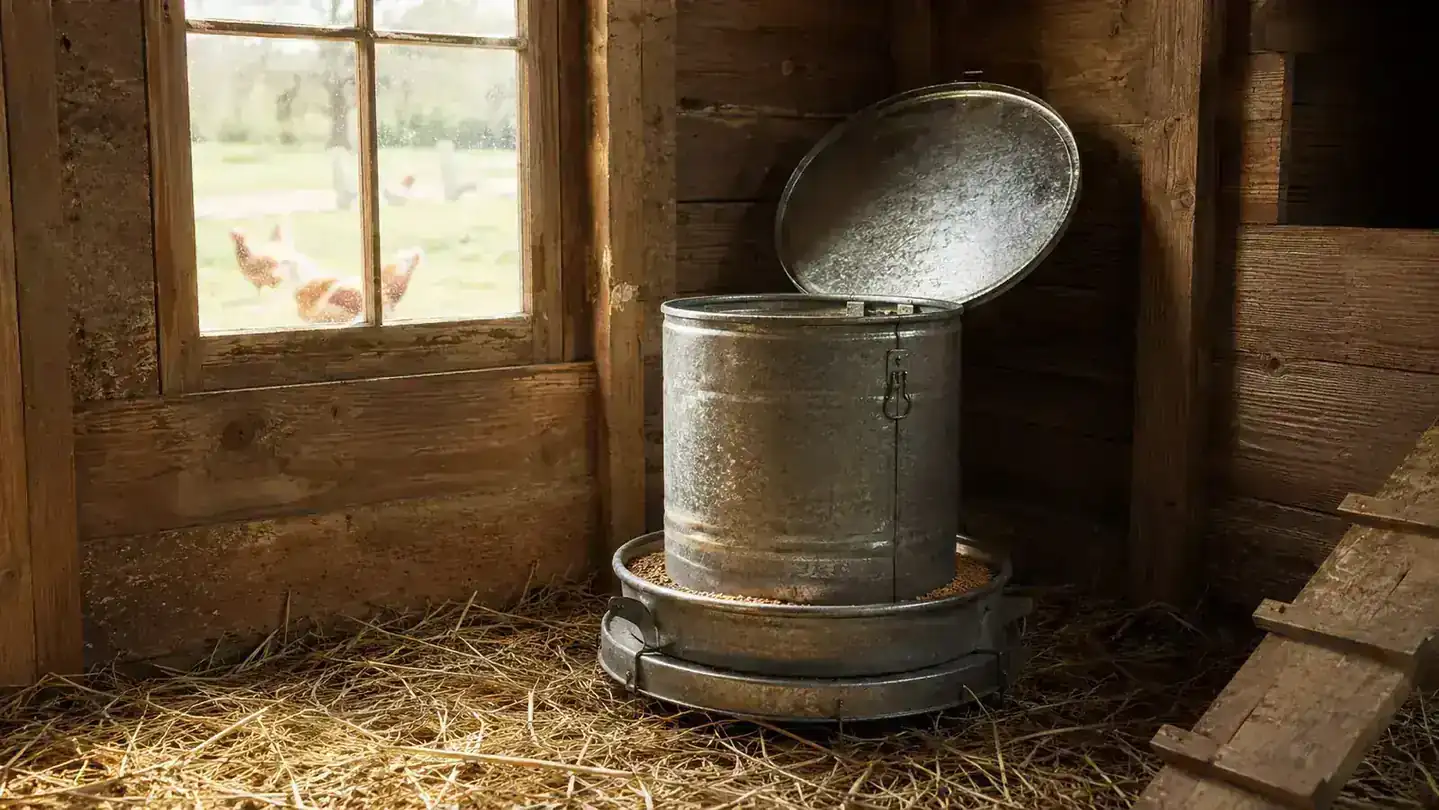
Every night for roughly six months I walked out to the coop and heard the same rustle in the shavings. By the time I turned on the light it was gone, but the evidence was always the same at dawn: a fine layer of cracked corn tracked across the floor, the cup-shaped feeder emptied past what my dozen hens could possibly scratch down, and rat droppings in the corner I kept sweeping and never quite keeping clean. I had tried the cheap tray feeder, the hanging tube, even fencing the feed off at night. The rats just waited me out. Then I read about treadle feeders and bought Grandpa's Feeders 20 lb model, and twelve months later the most honest thing I can tell you is that it fixed the waste, it thinned the rats, and it cost me more patience during the first week than the box ever warned about.
I'm Rosie. I keep about a dozen hens on a place in rural Missouri along with two horses and two rescue dogs, and I've been feeding birds long enough to be skeptical of anything with a fancy mechanism. This review is after a full year of daily use on Grandpa's Feeders 20 lb treadle feeder, through a wet spring, a hot summer, and the tail end of winter. I tell you the good and the parts I had to work around.
The Quick Verdict
After a year, Grandpa's Feeders is the most effective waste and rodent stopper I've tried, as long as you accept a loaded learning curve and a lid that takes daily nudging.
Amazon Check Today's Price →Stop pouring money into the shavings. That feed is going somewhere, and it isn't your hens.
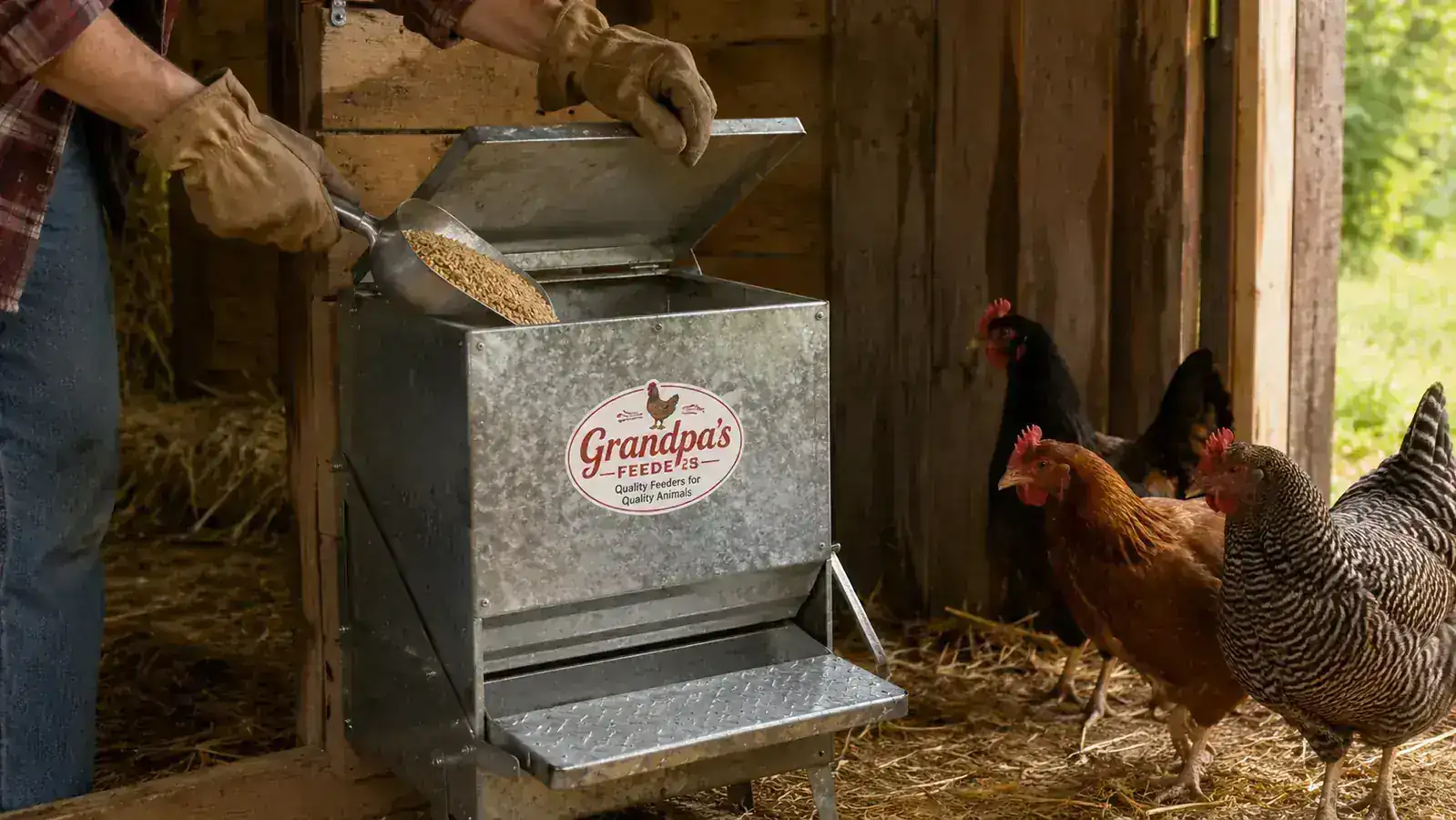
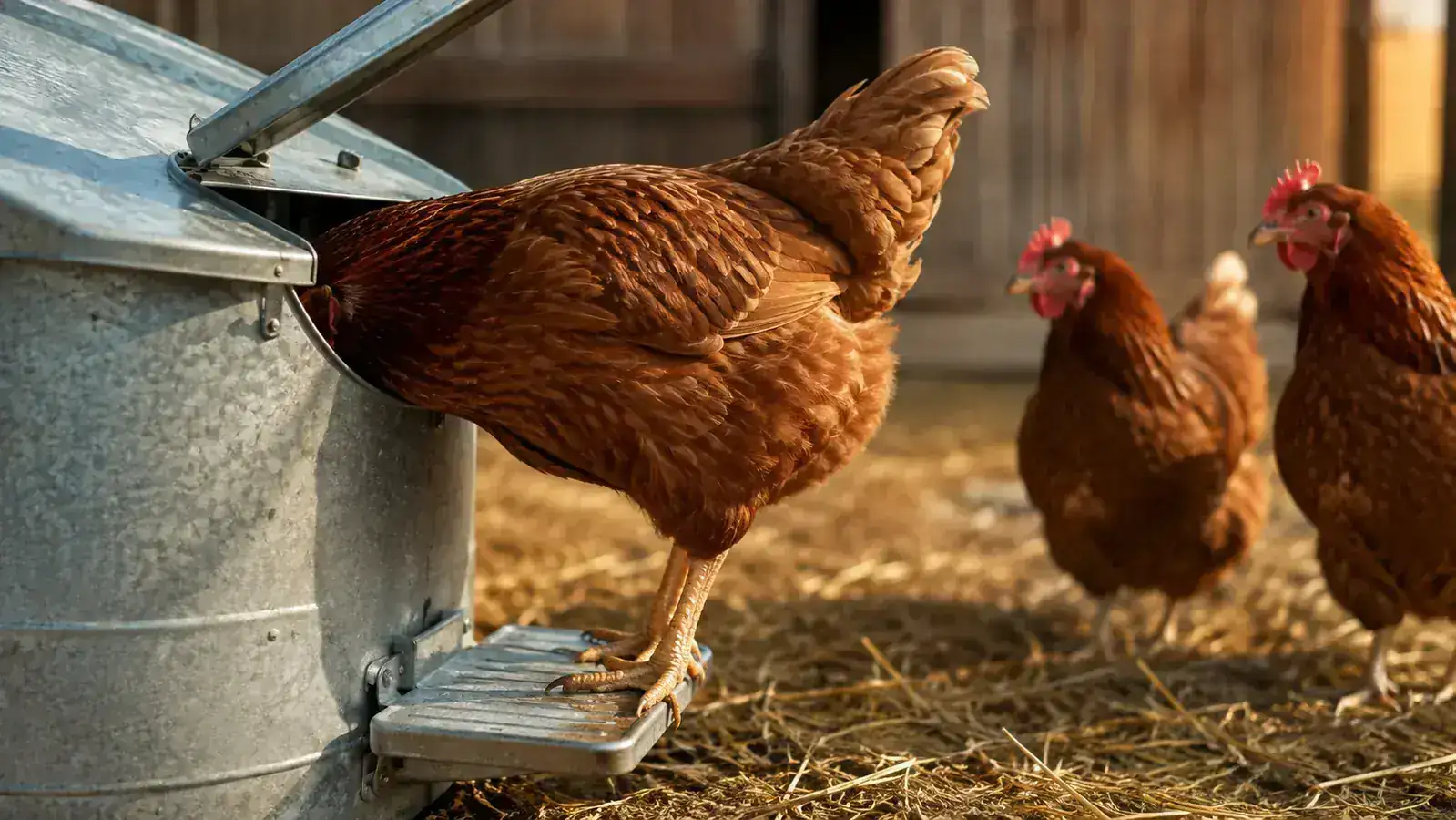
Grandpa's Feeders treadle feeder is the one thing that broke the nighttime rustle at our coop. The hens step on the platform, the lid opens, they eat, and the feed stays shut the rest of the time.
Amazon Check Today's Price on Amazon →How I've Used It
I bolted the feeder together in the barn on a Saturday morning, and the assembly came down to four legs, the galvanized body, the treadle platform, and the counterweight rod that holds the lid shut. The instructions are plain, the steel is heavy, and nothing about the build felt flimsy. I set it on a level patch in the run, scraped the old tray feeder out, and filled the hopper with about eighteen pounds of layer crumble.
The first morning was the honest humbling one. My hens are not stupid, but they are creatures of habit, and the treadle feeder looked nothing like the tray they had scratched at for a year. They stood in front of it and waited. The lid stayed down because nothing was standing on the platform. It took me two full days of scattering a few crumbles on the platform and gently pressing it myself before the first curious hen put a foot on the metal and the lid opened for her.
Once the first hen figured it out, the rest copied her within about a week. The real breakthrough came when I learned the two moves that matter: keep the counterweight tension correct so a hen at your flock's weight can trip it, and keep the lid from getting wedged by a heavy bird perching on top of the hopper instead of the platform. That perching problem came up constantly, and I'll come back to it.
What the Treadle Actually Changed
The first and most visible change was the floor of the coop. A tray feeder with a dozen hens will always leave a carpet of dragged-out feed, and every one of those spilled kernels is money that becomes either a rat's dinner or a slimy mess in the shavings. Once the hens learned the treadle, the spill dropped to almost nothing. The feed stays in the hopper until a bird stands on the platform, the platform closes the lid the moment she steps off, and the floor finally stays dry enough that I stopped sweeping crumble out from under the roost every single day.
Grandpa's Feeders rates this 20 lb model for about six chickens up to ten days, and with my dozen I found that number honest. I fill it roughly every four to five days depending on how hard they're laying, and the smooth flow of crumble through the tray means nobody gets shut out or bullied away. The galvanized steel shrugged off a year of rain, mud splatter, and the occasional hose-down without a spot of rust I could find.
The rat story is the reason most people buy this thing, so let me be straight with you. The treadle feeder did not eliminate the rats overnight, and anyone who tells you a feeder alone ends a rodent problem is selling hope. What it did was cut their easiest food source to a trickle. A rat is a strong little animal and can sometimes stand on the platform, but a rat that big is a lot less common and a lot more vulnerable, so the nightly rustle in the shavings faded within about three weeks. The rat droppings in the corner stopped appearing. It took the feeder plus a few other changes on my end to truly finish the job, and I detail those in the honest how-to, but Grandpa's Feeders deserves the credit for the biggest single swing.
The moment I knew it was working was the third week, when I carried feed out in the dark and heard nothing but the hens sleeping. The rustle in the shavings had just stopped existing.
How Much Feed It Actually Saved
I did not run a lab experiment, but I did keep a plain spiral notebook at the top of the feed bin for a few months, and the change was too big to miss. Before the treadle, a 50 pound bag of layer feed lasted me about five and a half weeks with a dozen hens. After the feeder settled in, that same bag stretched past seven weeks. The difference is roughly a quarter of every bag disappearing into the shavings and the local rodent population, not into my birds. Over a winter that is three or four bags you are not buying, which starts to look like real money after a few seasons.
Part of that math is pure wasted feed, the dragged-out kernels and the crumble my hens scratched onto the floor on purpose because some of it was always available to waste. Chickens will scratch feed out of a tray for the sport of it, even when they are full. A treadle feeder removes the temptation entirely because there is no open pile to scratch at. The birds eat from the tray while the lid is up, and the moment they step off, the rest disappears behind steel.
The other part of that math is the rats and the birds that were eating before you. A hanging tube feeder with a big open opening is a feeder, full stop, and anything that can reach it eats from it. Grandpa's Feeders is a feeder for your flock with a door for everyone else. Two weeks after the switch I stopped finding the tell-tale scatter pattern of a wild bird that had learned where the easy meal lived. That alone was worth the change to me.
The Lid, the Counterweight, and the Perching Problem
The treadle mechanism is simple in the way good farm tools are: a platform, a counterweight rod, and a lid that closes under its own weight. But simple does not mean set-and-forget. The counterweight tension sits in a narrow sweet spot. Screw it too loose and a heavy hen or a determined rat can push the lid partway open when nothing is on the platform. Screw it too tight and a lightweight young pullet cannot trip it at all, and she stands there baffled while feed stays shut. My solution, after a month of fiddling, is to set it so that my two heaviest birds can open it easily and my lightest one still can with a hard step. That Goldilocks setting has held for months without retuning.
The perching problem is the quirk I most want to warn you about. Hens love to roost on the highest point they can reach, and the flat lid of the hopper is exactly that for a bored bird. The trouble is that a hen perched on the lid tips the whole feeder and shifts the mechanism off balance, which makes the lid hang slightly open over time. I broke the habit by setting a scrap piece of wood near the feeder as a more comfortable roost spot, and it worked well enough. If you keep a flock with an especially acrobatic bird, budget one weekend for this.
What I Liked
- Nearly eliminated dragged-out and spilled feed after the hens learned it
- Galvanized steel took a full year of rain and mud without rusting
- Stopped the nightly rat rustle in the shavings within about three weeks
- 20 lb capacity means a dozen hens can go several days between fills
- Built like a farm tool, meant to be cleaned and fixed, not thrown away
Where It Falls Short
- Real learning curve for the hens, expect a week before they all use it
- Counterweight tension needs tuning for your flock's weight range
- Birds will perch on the flat lid if you give them a reason, which unbalances it
- It is a substantial up-front cost for a first-time chicken keeper
- The deep hopper is heavy to lift and fill when it is close to full
Daily Routine and Keeping It Clean
The maintenance is light but it is not zero. I give the tray a scrape every couple of days to clear out the fines and dust that build up in the trough, because crumble powder can pack down and slow the flow. Once a month I take the whole hopper off, hose it out in the barn yard, and let it dry in the sun before I set it back. The steel survives this easily, and the top access lid makes filling a two-minute job instead of the wrestling match I expected from a 20 lb capacity hopper.
The one part of the routine I will warn you about is the weight of the hopper. A 20 lb feeder holds a lot of feed, and a nearly full hopper is a genuinely heavy thing to lift up to fill it, especially if you are not tall. I keep mine on a low sturdy crate so the top sits at hip height, which turns the fill from a shoulder strain into a smooth tip from a five gallon bucket. That small change made daily life much easier and I mention it because it is not in the instructions.
In all of 2026 I have replaced exactly one part, and that was a worn counterweight washer after a hard freeze cracked it. The replacement was a couple of dollars at the hardware store, the mechanism came apart and went back together in ten minutes, and I was struck by how refreshing it was to fix a feeder with an Allen key instead of throwing a plastic one in the bin. That repairability is a big reason I would buy this again over a cheaper feeder.
Who This Is For
This feeder earns its keep for anyone who is tired of watching feed vanish. If you keep six or more birds, if you have ever seen a rat, mouse, or even a persistent wild bird duck into an open tray, if you are gone from home for a full day and want the flock fed without a feed pile left lying out, then a treadle feeder is the difference between feeding your chickens and feeding whatever else is out there. I would also put it near the top of the list for anyone who genuinely wants less daily coop work. Once it is tuned, I fill it every four or five days and stop thinking about feed.
I have walked a first-time chicken keeper through this exact decision more than once, and the pattern is always the same. The people who are happiest with a treadle feeder are the ones who already know they have a waste or rodent problem and want a mechanical answer they can trust to work whether or not they remember to shut the door at night. If that is you, Grandpa's Feeders is the one I would buy again.
Who Should Skip It
Be honest about your flock before you spend. If you keep only two or three hens, the capacity and the price outstrip what you need, and a lighter, cheaper feeder will do fine. If you raise a lot of young birds who will hit their full weight in a month, or if you hatch chicks frequently, the delicate counterweight tension on the smaller birds can be a frustration. And if you simply do not have a rodent or waste problem, this is a solution to a problem you do not have. It is also not a route to ignore other rat control; it is the strongest single tool, not a magic wall. Buy it because you want to stop hand-feeding the local wildlife, and it will earn its place.
The Bottom Line After a Year
A year is long enough to stop being impressed by new and start noticing what wears out. The rats did not come back, the feed savings held steady through all four seasons, and the only part I had to fix cost me a couple of dollars and an Allen key. The learning curve and the counterweight tuning cost me patience up front, and the price is real for a first-time keeper, but if you have a flock big enough to make a treadle worth it, Grandpa's Feeders pays for itself in spared bags of feed and a coop floor you are not sweeping every morning.
A year on, this is the one feeder I would not go back from.
Grandpa's Feeders treadle feeder cut our wasted feed to almost nothing and thinned the rats in a way no hanging tube ever did. If you are done sweeping crumble off the coop floor, this is the move.
Amazon Check Today's Price on Amazon →