
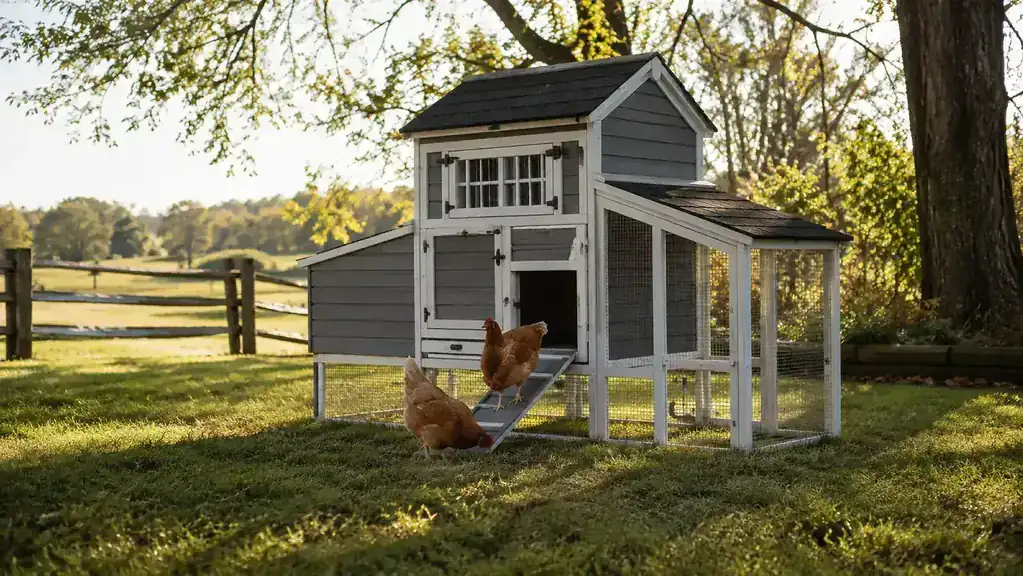
You know the feeling. The pre-fab coop you bought on a whim has a rotted floor by year two, the wire on the run panel dents in when a raccoon leans on it, and every spring you're shaking your head at another round of shavings that went moldy because there's no real air moving up top. You patch it with a tarp, you tell yourself you'll get around to a proper build, and then another storm hits and you're right back out there with a shovel and a heavy heart. That was us three years ago, before I got serious about a real wooden coop. Now, after a full year in the weather with the Aivituvin wooden coop for 4-6 birds, I can tell you exactly what held up and what didn't.
I'm Rosie Callahan, and I keep about a dozen hens on a homestead in rural Missouri, alongside two horses, two rescue dogs, and a garden I put in every spring and dig out every fall. I've had cheap coops, built a couple of my own, and watched two of them fail from weather and predators. So when I put the Aivituvin in last June, I treated it like a test: one full year of rain, a Missouri winter that hit single digits, and a raccoon that never gave up trying. I wanted to know if this was a coop I could count on at 6 a.m. in the dark and at dusk in a downpour, or just another pretty box that looked good in the product photos. Here's the honest report.
The Quick Verdict
A genuinely solid wooden coop that survives a full Midwest year if you accept the two things it needs from you out of the box: a layer of sealant on the corners and predator-proofing on the run door. Not perfect, but it's the first coop I've owned I don't dread checking on.
Amazon Check Today's Price →The wooden Aivituvin coop that finally outlasted my cheap ones
After a full year of rain, snow, and a persistent raccoon, this is the coop that held its own on my place. If you're tired of replacing rotted pre-fab boxes every couple of years, check today's price and see what the real build costs. I put in one hour of sealing when it arrived and I have not worried about it since.
Amazon Check Today's Price on Amazon →How I've Used It
I've had the Aivituvin sitting in the same spot, with the same six hens in it for rotating batches of layers, since June of last year. That's a full twelve months of daily use: I open the run every morning, top up water and feed, gather eggs mid-day, and close things up at dusk. Through it all the roof stayed on, the floor stayed dry under the deep litter, and in February when we hit 9 degrees for a week straight, the birds came through it cold but healthy. No frostbitten combs, no panic at the door, just a steady little flock that knew where home was.
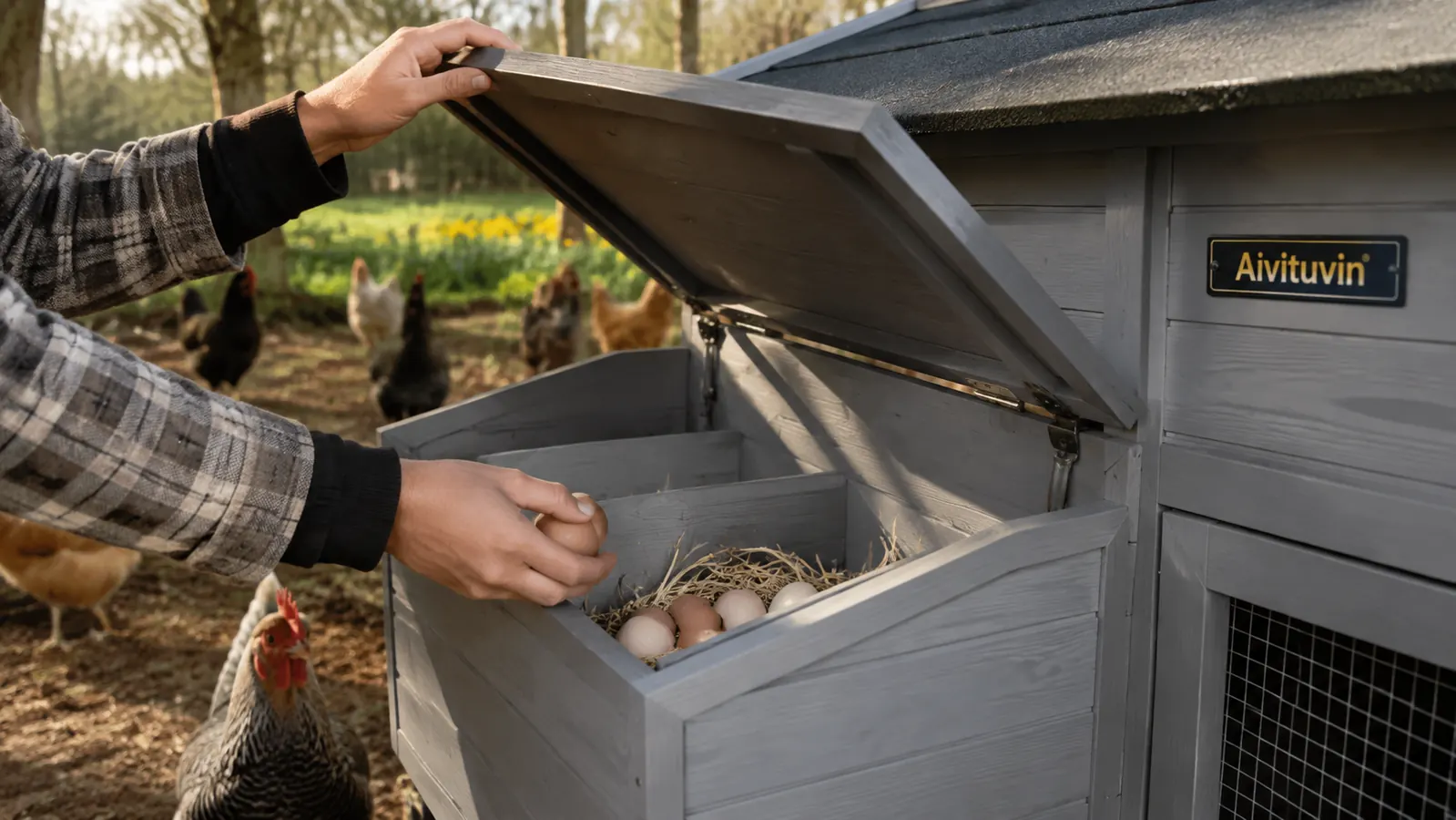
The coop is built from fir wood with a pitched, asphalt-covered roof and sits on sturdy legs. That raised floor matters more than you'd think on a Missouri property that turns to mud, because it keeps the bedding off the damp ground and gives the run a dry-ish spot underneath. The two nesting boxes pop out from the side for easier collecting, and there's a sliding door that seals up tight at night. It is not a walk-in coop, and I never pretended it was. For six birds it gives them enough room to roost, nest, and get out of the wind, which is what a coop is actually for.
I want to be straight with you that I did two upgrades before the first winter, and I'll show you my reasoning in a minute. But even stock, out of the crate, this is a far sturdier thing than anything I'd had under a tarp before it. If you are the kind of keeper who wants a coop you can mostly ignore and just enjoy, this is close to that. If you want something you open up and enjoy feeding from, this works too.
What Held Up Through the Rain
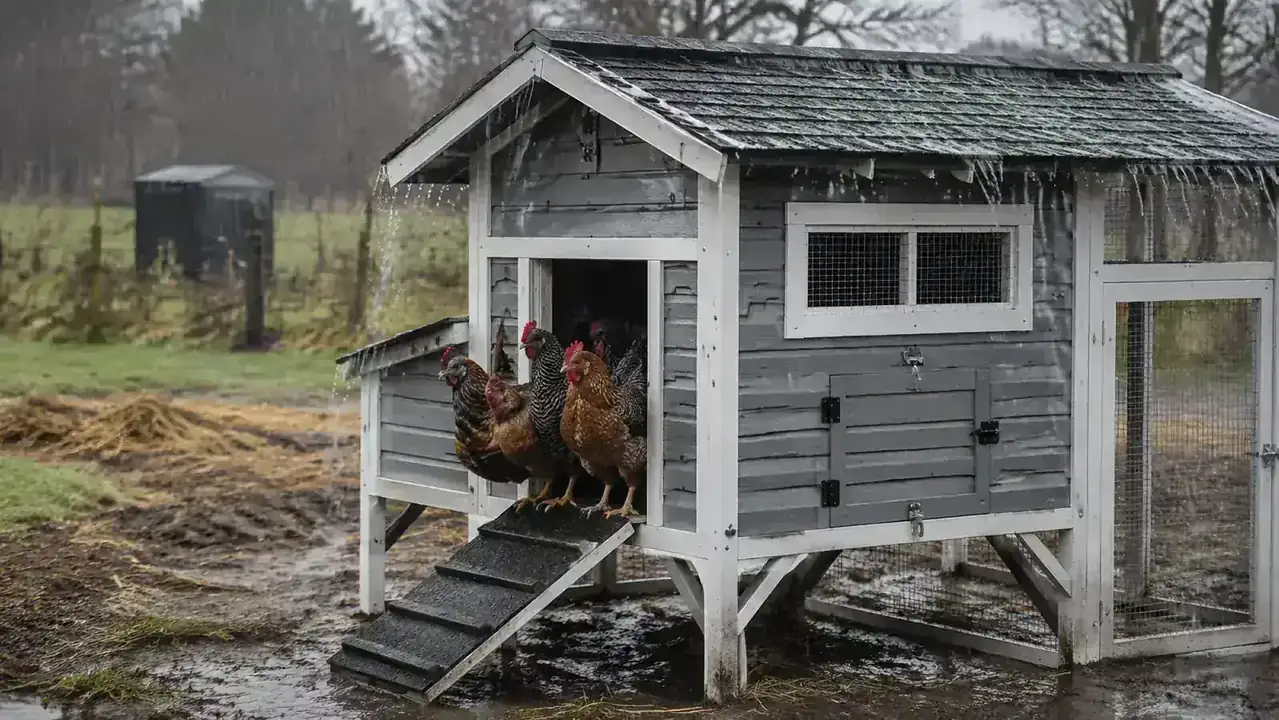
Missouri gets a lot of sideways rain, the kind that blows in from the west and soaks everything that isn't sealed. It also gets sudden downpours in spring and slow, soaking weeks where the ground never quite dries out. I'll be honest: the raw fir will take on water if you leave it bare, and that's the single biggest thing I want you to take from this review. Out of the box, the Aivituvin is protected by its paint and the asphalt roof, but the corners and the edges of the hinged panels are where water finds its way in first.
Before the first autumn storm, I sealed every seam and corner on the outside with a can of exterior wood sealer, maybe an hour of work with a brush. That one step is the difference between this coop lasting six years and it lasting two. After a full year of rain and snow, my wood still looks like the day I bought it, with no signs of rot, no warping on the panels, and no leaks around the roof. That pitched roof sheds water beautifully, and the raised floor stayed dry even during the week of constant rain we had in May.
Here is the detail people skip in the reviews. The seams where the roof panels meet the walls, and the bottom edge of the hinged side doors, are the two places I found dampness reaching for the wood. A coat of sealer on those joints, and checking them once in the fall, has kept everything tight. On a very rainy stretch I also make sure the ground around the legs stays sloped away, so water is not sitting in a puddle under the floor. That is just good sense with any raised coop, and it has kept the bottom from wicking moisture up into the bedding.
The Raccoon Test, and What I Had to Fix
I don't have to tell most of you about raccoons. They're clever, they've got those little hands, and they will work on a latch all night. They also travel in family groups and they remember where a food source is. The Aivituvin has a latch you can padlock, which is a real plus, and the frame is solid enough that a raccoon can't pry a panel loose the way they can on a cheap coop. I never once found a night raider inside, which is more than I could say for my old setup.
But I'm also not going to pretend it's fortress-proof. The run area is enclosed with wire, and the access door on the run uses a lighter framing than the main coop body. A determined raccoon will worry at the run door seam. Mine found it, I am fairly sure, because I could see fresh scratches and a few bent staples on the frame the morning after a storm. I reinforced mine with a couple of extra screws and a hasp so it can't be pried, and I consider that essential for anyone in serious predator country. Put the money toward a sturdier latch and a padlock and you're set.
The lesson is not that the Aivituvin is weak. It is that no coop on the market with a wire run is going to shrug off a determined raccoon forever, so the smart move is to build in that tiny bit of margin before you need it. Fifteen minutes the afternoon it goes up, and you never have to lie awake listening for that soft scrape at the wire at 2 a.m. I slept through the whole first winter without a single visit inside, and that peace of mind is worth more than the price of the coop.
After a full year, my Aivituvin wood shows no rot, no warping, and no leaks, and not once did a raccoon get in. That is more than I could say for any coop I owned before it.
Everyday Life: Gathering Eggs and Cleaning
The two nesting boxes pop out from the side, and I keep their floors covered with fresh straw. On a normal day I get six eggs from my rotation, and the side access means I never have to crawl inside the coop to reach them. That little thing has saved my back more times than I can count after a garden day. I lift the hinged access roof, reach in, and the eggs are right there without disturbing a single hen if I do it quietly.
Cleaning is straightforward because the structure comes apart where you want it to. The tray under the roost slides out for a quick scrape, and I can lift the hinged roof to get at the deep litter when it needs a full turnover. Nothing about the Aivituvin makes cleaning harder than any other quality coop, and a couple of design choices, like the pop-out nesting boxes, make it genuinely easier. I do a light scrape every other day with a putty knife, and a real deep-clean once a month when I pull all the shavings and bleach the floor.
One small gripe: the roost bar inside could sit a touch higher to give the birds an easier jump, but mine adapted within a week. It's a minor thing and not a reason to skip this coop. I will also say the sliding door takes a firm hand in cold weather, when the wood swells just a little. It still closed tight every night, which is what matters most in January when the wind is howling off the pasture.
Pros and Cons After a Full Year
What I Liked
- The pitched roof and sealed panels came through a full year of Missouri rain and snow with no rot, no warping, and no leaks around the roof
- Solid frame and a latch you can padlock, and I never once found a night raider inside the main coop
- Pop-out side nesting boxes mean I gather the day's eggs without crawling in or disturbing a single hen
- The tray under the roost slides out for a quick scrape and the hinged roof opens up the deep litter for a full turnover
- Comfortably sized for a rotation of four to six birds
Where It Falls Short
- The raw fir will take on water if you leave it bare, so budget an hour with a can of exterior sealer before the first wet season
- The run access door is framed lighter than the coop body, and a determined raccoon will worry at that seam until you add a hasp and a couple of screws
- The roost bar sits a touch low, so the birds have an awkward jump for the first week
- The sliding door takes a firm hand in cold weather once the wood swells
- Too small if you keep more than six birds or you want a walk-in coop you can stand inside
Who This Is For
This is the coop I'd point a first-time keeper toward who wants to start right, or a seasoned one who's sick of replacing flimsy boxes. If you keep four to six birds and you live somewhere that gets real weather, the Aivituvin's raised floor, pitched roof, and solid frame give you a foundation you can build on for years. It's also a good fit if you want a coop that looks like a proper little house in the yard rather than a sheet-metal shed. The grey finish is tidy and it does not scream at you from across the pasture.
It is especially good for a smaller flock of layers where you actually want to collect eggs without a fight. If you are just starting out and want something you put together once, seal, and then mostly forget while you learn the rest of chicken keeping, this coop carries its weight. You can spend your energy on good feed, clean water, and predator habits instead of patching holes in a cheap box.
Who Should Skip It
If you're not willing to put in an hour of sealing and predator-proofing when it arrives, you're leaving money on the table, because that's what buys you the long life. If you keep more than six birds, or you want a walk-in coop you can stand inside, this is going to feel small and you should look at a bigger build. And if you want zero assembly and zero upkeep, there's no wooden coop that fits that bill, this one included. It shows up in pieces and you will spend a patient afternoon with a drill before the first hen steps up the ramp.
The same goes if your flock free-ranges all day and comes home to roost, because then the run is mostly a place to sleep and the bigger concern is the roost side, not the run. And if you are the sort who likes to add on to your coop over time as the flock grows, a fixed 4-6 bird coop will hit its ceiling faster than a modular setup. Match it to your herd size today, not the dream flock you might have someday.
The Alternatives I Considered
I looked hard at the other wooden coops in this size class before I committed, and the closest contender was the Petsfit line. The Petsfit coop has similar good intentions with real wood and a raised floor, and some folks prefer its layout. But after comparing build quality, roofing, and how the two nesting boxes work on the Aivituvin, I kept coming back to this one. The Aivituvin's frame felt tighter to me, the pitched roof sheds weather better on my side of the state, and I preferred where the nesting boxes sit for gathering.
If you want the full side-by-side on how they stack up against the same weather and the same raccoon, that walkthrough is worth a read before you spend. And if you are brand new to all of this, my beginner setup guide walks you through siting, bedding, and predator-proofing in the order that actually matters, so you do not make the mistakes I made with my first two coops. The Aivituvin was the right call for me, but the homework ahead of you is real, and it pays to do it before the crate shows up at your door.
My verdict after a year: this is the coop I stop worrying about
A year in, through rain and single-digit cold and a determined raccoon, the Aivituvin wooden coop is the first one I've owned that I don't dread checking. Give it the hour of sealing it deserves and it'll be the last coop you buy for a long while. See today's price and whether it fits your flock before you settle for another box that rots by year two.
Amazon Check Today's Price on Amazon →