
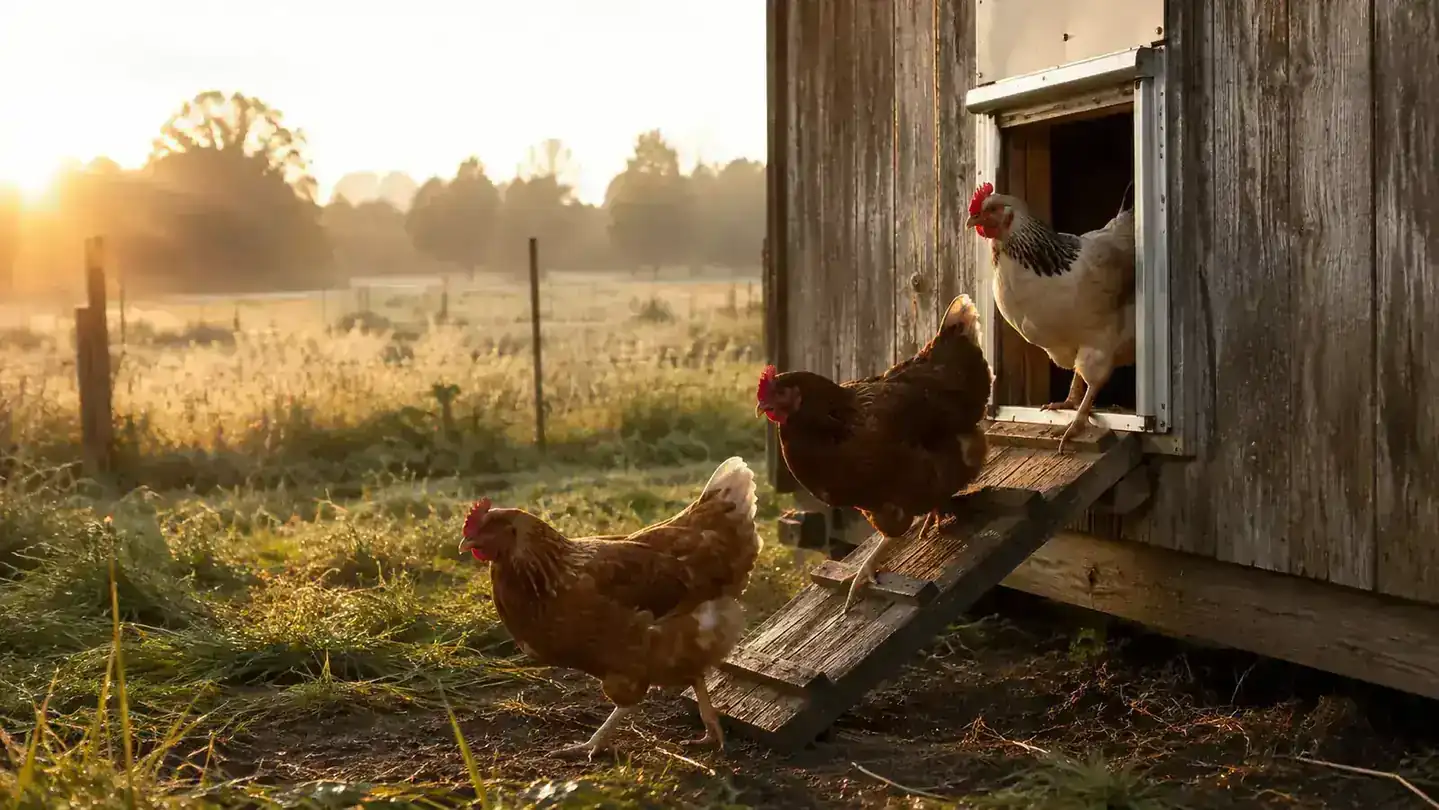
If you keep chickens long enough, you learn that the coop door is the one job you never want to forget. A missed close at dusk is how a raccoon gets a hen, and a missed open on a hot morning is how a coop turns into an oven. So when two automatic doors kept showing up in my searches, the RUN-CHICKEN T50 and the Omlet Autodoor, I wanted to know which one you could actually trust with your birds. The short answer, before I bury it: I ran the RUN-CHICKEN T50 on my own coop for a full year through a Missouri winter, and I borrowed an Omlet Autodoor from a neighbor to run it through the same stretch of weeks. They are not the same door, and the difference matters a lot more than the price gap.
Here is the honest version before I go any further. If you want a door that survives weather, predators, and daily use without you thinking about it, get the RUN-CHICKEN T50. It is built tougher, runs months on one set of batteries, and the mechanical predator lock gives me a genuine piece of mind I never quite felt with the Omlet. That is not a knock on Omlet. The Omlet Autodoor is a good door, I want to be fair to it. It is just a different door for a different kind of chicken keeper, and you should know which one you are before you spend on either.
| RUN-CHICKEN T50 | Omlet Autodoor | |
|---|---|---|
| Price | Lower, budget friendly | Higher, premium |
| Build | Aluminum plate, all-weather body | Plastic housing, lighter |
| Battery | Months on 4 D cells | Rechargeable, needs charging |
| Predator lock | Mechanical slide lock | Motor holds door closed |
| Install | Heavier, needs a drill | Lighter, more forgiving |
| Extras | App plus timer plus light sensor | Clean app, smart setup |
| Best for | Rough weather, tough use | Tidy setup, low fuss |
Let me slow down and give you the details, because the table hides which one you should actually buy and why. The headline difference is not features on paper, it is how each door behaves when the weather turns and your hands are frozen. That is where a full year of running the RUN-CHICKEN T50 and the same three months of watching the Omlet taught me more than any spec sheet ever could.
If you want the door that shrugs off rain and predators, start here
I tested the RUN-CHICKEN T50 through ice, mud, and a persistent raccoon, and it never missed a close. It is the tougher, cheaper, longer-battery door, and my hens have depended on it every night for a year. Check today's price and current stock before you decide.
Amazon Check Today's Price on Amazon →How I Actually Tested Both Doors
Before I tell you who wins, you should know how I sized them up, because nobody wants a review that never got off the couch. Our coop sits in the open pasture, not tucked under the barn, so it takes the full brunt of Missouri weather. Last winter we had ice storms, weeks of rain, nights down to single digits, and one stretch where the run was nothing but ankle deep mud. That is exactly the kind of abuse I want a coop door to survive, because that is what a real coop door lives in.
I ran the RUN-CHICKEN T50 as my primary door, meaning it was the one my roughly dozen hens actually depended on every morning and night. The Omlet Autodoor I bolted to a spare hatch on a neighbor's coop she lets me use, and I checked it daily over the same three cold months. I tracked three things: whether it closed on time at dusk, whether it opened on time at dawn, and how much fiddling it needed when the weather got bad. I logged every miss in a spiral notebook on the kitchen counter, which made my husband roll his eyes, but it gave me a clean record instead of a vague feeling.
I also left the same set of D cells in the RUN-CHICKEN from October on, so I could watch how its light sensor handled the days getting shorter before the deep cold set in. It shifted the close time on its own as dusk came earlier, and I only nudged the setting a couple of times all season with the manual override. That hands-off feel is a big part of why I stopped glancing out at the coop at night, which turned out to be a lot more restful than I expected.
Where RUN-CHICKEN Wins
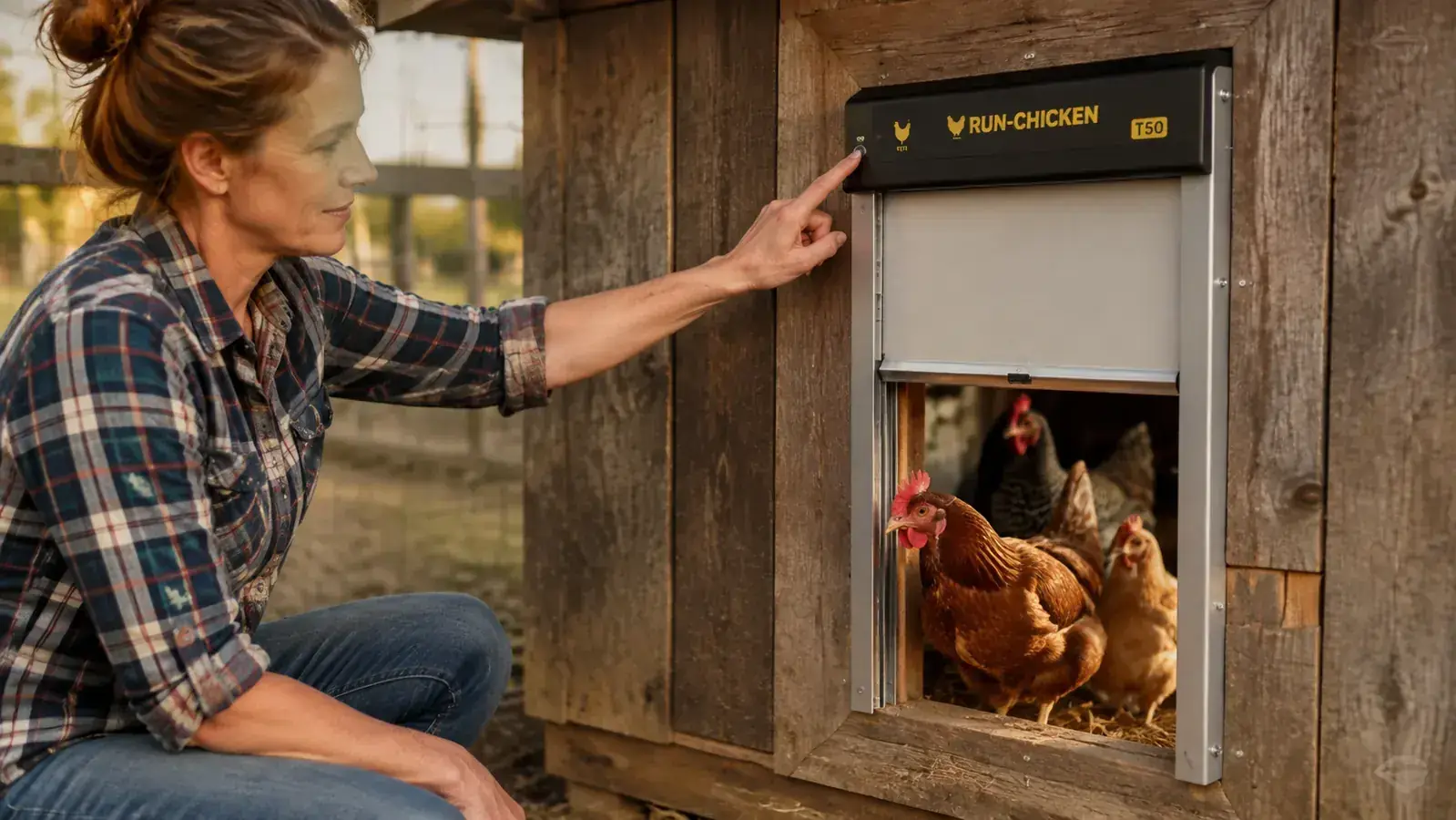
The first thing you notice about the RUN-CHICKEN T50 is that it feels like a tool, not a gadget. The door itself is an aluminum plate, and the body is a chunky weatherproof unit that bolts to the coop wall. After a full year of rain, blowing sleet, and the occasional muddy chicken pressing against it at dusk, the aluminum still slides smooth and the housing has not cracked or faded a bit. That is the kind of durability I care about, because a coop door lives outside in the elements every single day of its life, winter and summer alike.
Battery life is where it beats the Omlet by a mile. The RUN-CHICKEN T50 runs off four D cell batteries, and I only had to change them once in the whole year, and that was at the height of winter when the cold was draining everything. The Omlet Autodoor runs on a rechargeable battery you have to remember to keep charged, which is a small mental load I did not enjoy at all. If that rechargeable drops on a cold night, you are standing out in the mud with a door that will not close and a coop full of birds waiting to be let in. With the RUN-CHICKEN, a four pack of cheap D cells is a full year of not having to think about power at all.
There is also the app and the timer, and I will say the RUN-CHICKEN gives you both even though it is the cheaper of the two doors. I mostly leaned on the light sensor, but on the days I had a farrier coming or needed the girls out early, I could reach over from the kitchen and override the open time without walking out in the rain. You do not need the app to make the door work, which I appreciate, but it is a real comfort on a miserable morning.
Then there is the predator lock, and this is the part I care about most. I lost a hen to a raccoon a few years back, so I do not kid myself that a door simply closing is enough. The RUN-CHICKEN T50 has a mechanical slide lock that physically seats when the door shuts, so a predator bracing against the outside cannot just push the panel up out of the track. The Omlet relies on the motor holding the door in place, which is fine when everything works right, but a mechanical lock is a lot harder to defeat. On a farm, that is the difference between a quiet morning and a bad one.
The RUN-CHICKEN T50 ran a full year on one set of D cells, and its mechanical slide lock is the one true piece of mind I felt handing over my girls' safety at dusk, night after night, without a single miss in the book.
Where Omlet Wins
I am not going to pretend the Omlet Autodoor does not have real strengths, because it absolutely does. The biggest one is how tidy the whole thing is. The Omlet is a well thought out package with a clean plastic housing and an app driven setup that is genuinely pleasant to use. My neighbor loved the app on her phone, checking and adjusting the door from the kitchen without walking out in the cold. If your coop is a neat, level structure and you care about how the outside of it looks, the Omlet will sit prettier on the wall than the functional but blocky RUN-CHICKEN unit.
The Omlet is also easier for someone who is not handy. The RUN-CHICKEN T50 asks you to mount a heavier unit and wire up a battery housing, which is not hard but does take half an afternoon and a drill. The Omlet is lighter, the install is a little more forgiving, and a first-time chicken keeper who has never put a drill to a coop wall will find it less intimidating. If you would rather not fuss with mounting hardware and want a door that is nearly plug and play, the Omlet is the gentler path to the same basic goal.
For my money, the tough aluminum door wins
After a year of ice, mud, and a persistent raccoon, the RUN-CHICKEN T50 is the door I trust with my hens. See what it costs today and whether it is in stock before you settle for something that asks you to babysit it.
Amazon Check Today's Price on Amazon →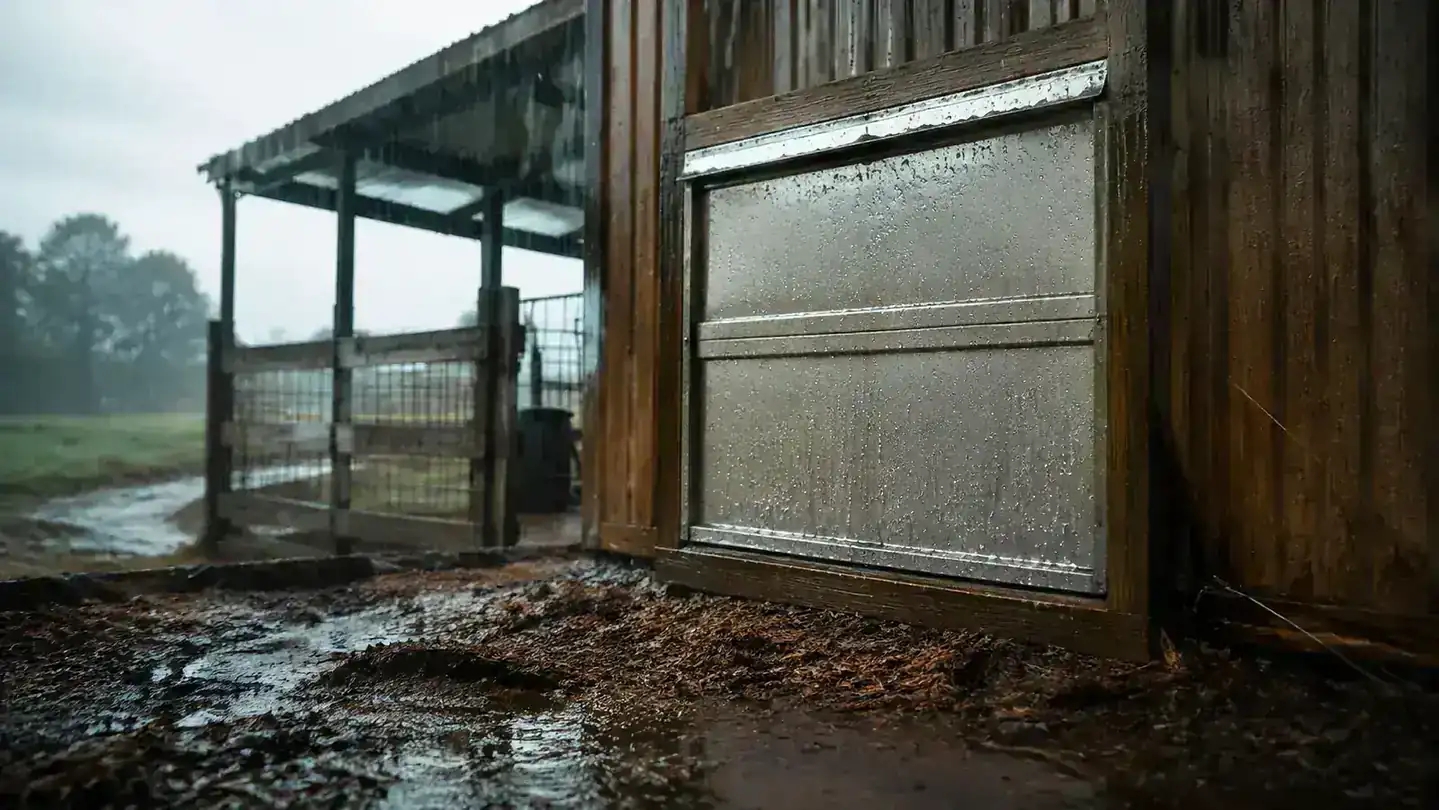
What Nobody Tells You Before You Buy
Whatever you buy, there are a few honest truths about automatic doors that the box does not print. First, both doors need the opener reasonably level and firmly mounted. A door that hangs crooked will bind, and a door that is loose will rattle and eventually fight you. Take the time to bolt it down square. Second, light sensor timing shifts through the year, so both doors let you adjust the open and close times as the days stretch and shrink. Do not set it once in May and never touch it again.
Third, and this is the one I wish someone had told me: keep the track clear. Snow, ice, or a stray straw can jam the slide, and a jammed door at dusk is your worst nightmare. I made a habit of a quick wipe of the track every week and especially before a forecasted storm, and that single habit is probably why my RUN-CHICKEN never missed a close even in the worst of it. A clean track is cheap insurance on either door, and it is the maintenance most people never think about until the door stops working.
The Case for a Simpler, Cheaper Door
I want to be honest about one more side of this, because there are cheaper automatic doors out there that a lot of people start with. Some of them run on a gravity counterweight and a light sensor, with no app and no batteries. They are cheaper and dead simple. I have seen some folks love them. But the two I have tried cheap out on the part that matters: they are easier for a determined predator to push open, and their light sensors get fooled by a passing storm or a bright flashlight, closing the door at the wrong time.
For a half dozen birds that cost real money and lay eggs I depend on, I decided cheap did not cut it. Between the RUN-CHICKEN T50 and the Omlet, both give you a light sensor and a timer, and both are genuinely predator resistant. The difference is that the RUN-CHICKEN adds a mechanical lock and a year of battery life at a lower price, which is why the math lands where it does for me. If a door is going to cost money either way, I would rather spend it on the one that does not need my attention in a February ice storm.
Who Should Buy Which
Buy the RUN-CHICKEN T50 if your coop is exposed to real weather, if you want to set the batteries once and forget the door for a year, or if you have ever had a predator test a door in the night. It is the tougher all-rounder, and it is the cheaper door to boot. That combination, more durable and less expensive, is why it is my pick and the one I recommend to most people after a year of running both side by side.
Pick the Omlet Autodoor if your coop is tidy and sheltered, if you enjoy a clean app and a neat install, or if you are a first-time keeper who wants the least intimidating path into an automatic door. It is a good product with a real reason to exist. It just costs more and gives you shorter battery life to get there, and those are the two things I weigh most heavily when my birds' safety is on the line at dusk. For me, and for most of my flock-keeping friends who have seen my notebook, that math points one clear direction.
A dozen hens are worth a door you never think about
The RUN-CHICKEN T50 closed on time every night for a year, through everything Missouri threw at it, and never once needed me to step out in the cold. Check today's price and current stock.
Amazon Check Today's Price on Amazon →