
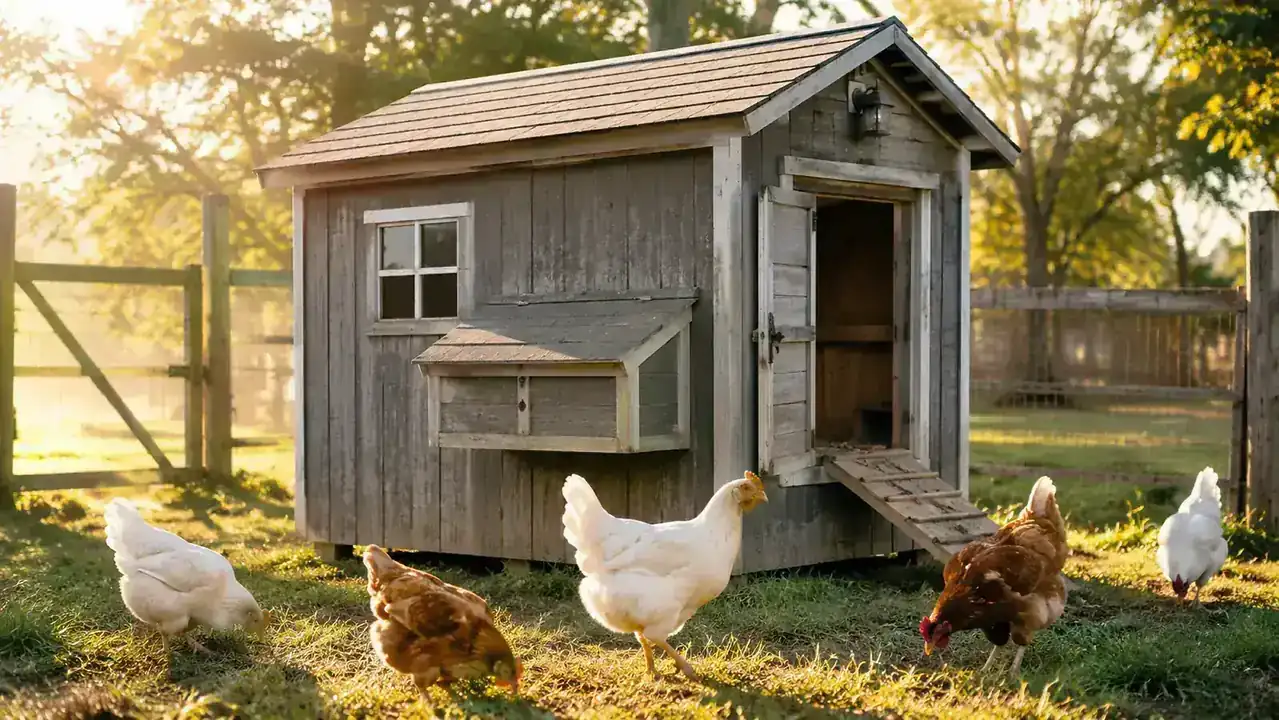
I kept my first handful of hens in a wire run with a tarp thrown over one end. It was cheap and I told myself it was fine. Then a January rain soaked the bedding for a week straight, a stray dog bent a corner of the wire one night, and I spent two evenings dragging a wheelbarrow of soured straw to the compost. The flock of about a dozen birds I keep now on our Missouri place finally moved into a real wooden coop, the Aivituvin with the two nesting boxes, and it changed the daily work more than anything else I own. If you are still deciding, here are the ten reasons I would not go back.
I am not the type to spend money just so things look tidy. Most of what I own came from the farm store or the classifieds. But a coop is different, because it is the roof and the walls over a living thing, and one wet night and one patient raccoon taught me that cheaper up front can cost you twice in bedding, eggs, and sleep. This is the part of the setup I want to get right, and these are the honest reasons why.
The Wooden Coop That Survived Our Rainy Year
A real wood coop for 4 to 6 birds with two nesting boxes, built to take a full Missouri weather year and a persistent raccoon. See the Aivituvin and check today's price on Amazon.
Amazon Check Today's Price on Amazon →It Keeps the Bedding Dry When the Rain Won't Quit
A tarp sheds water until the wind lifts an edge, and then everything underneath soaks. We had nine days of off-and-on drizzle last January, and the run's shavings went sour by day three, the whole place smelling like old tea. The Aivituvin's solid wood walls and pitched roof keep the bedding dry through a three-day soaker, so you are not forking out a wheelbarrow of wet shavings after every storm. Dry bedding is the secret to less digging, fewer flies, and lower ammonia come winter.
It Blocks the Wind That Slipped Straight Through Wire
Chickens handle cold well, but a draft across the roosting bar is what wears them down. In the wire run I could stand at the door and feel the wind cut right across the birds at head height. The Aivituvin's solid wooden sides stop that entirely, so on a raw February morning the hens come off the roost warmer and steadier, feathers fluffed instead of huddled. A comfortable bird keeps laying through the cold months, and that is what a few solid walls buy you.
A Wooden Door That Shuts and Stays Shut at Dusk
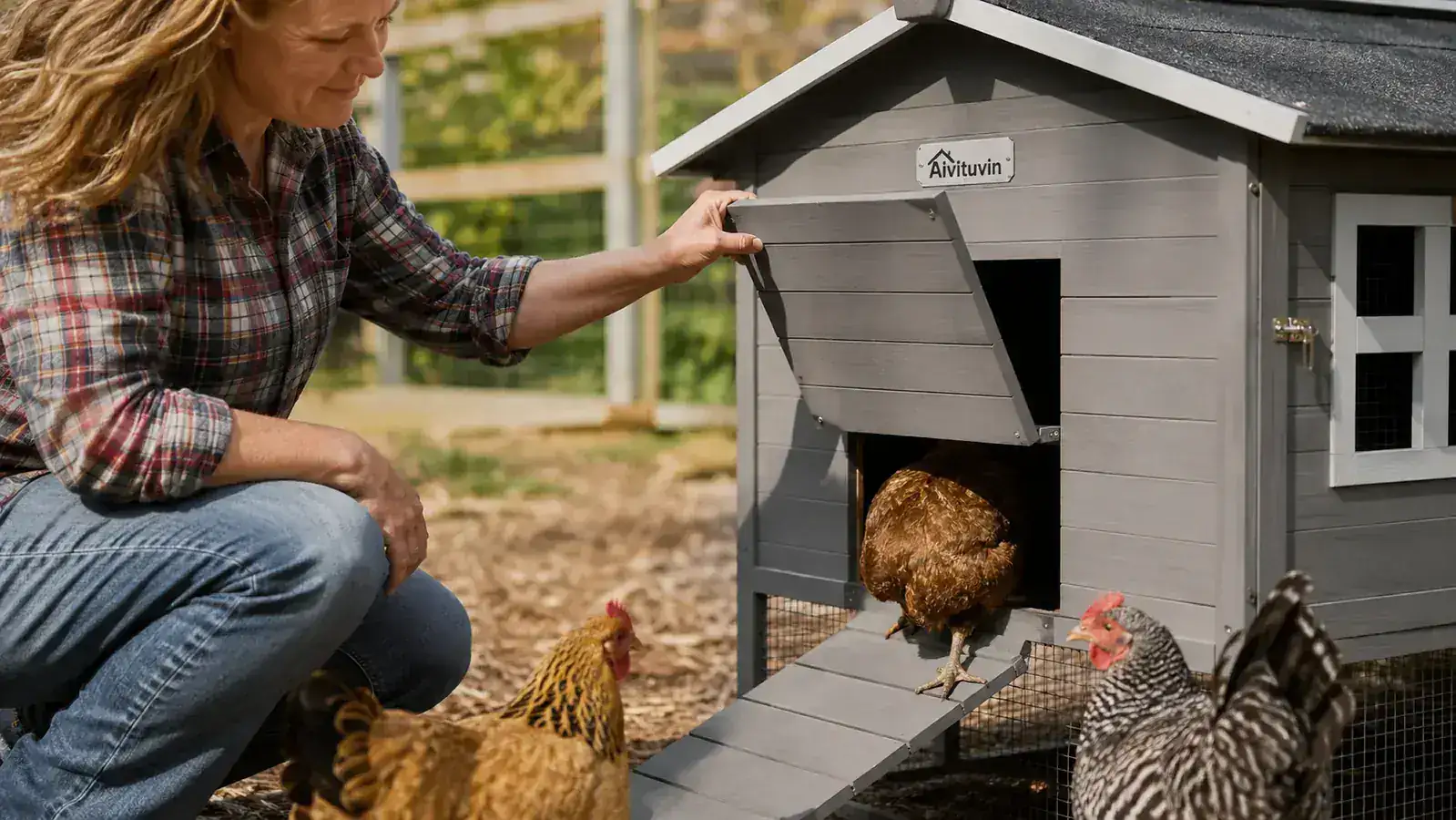
The raccoon that found my first run just pushed the tarp aside like a curtain. I came out with a flashlight and there he was, all patience and paw. A proper hinged wooden door with a latch gives you a barrier you can close at dusk and trust until dawn. The Aivituvin's door is solid wood, not wire, so there is no panel seam for a smart paw to work loose, and the latch sits high enough that it never pops in the night. That peace of mind alone is worth a good share of the price.
Two Nesting Boxes You Can Reach Without Crouching in Mud
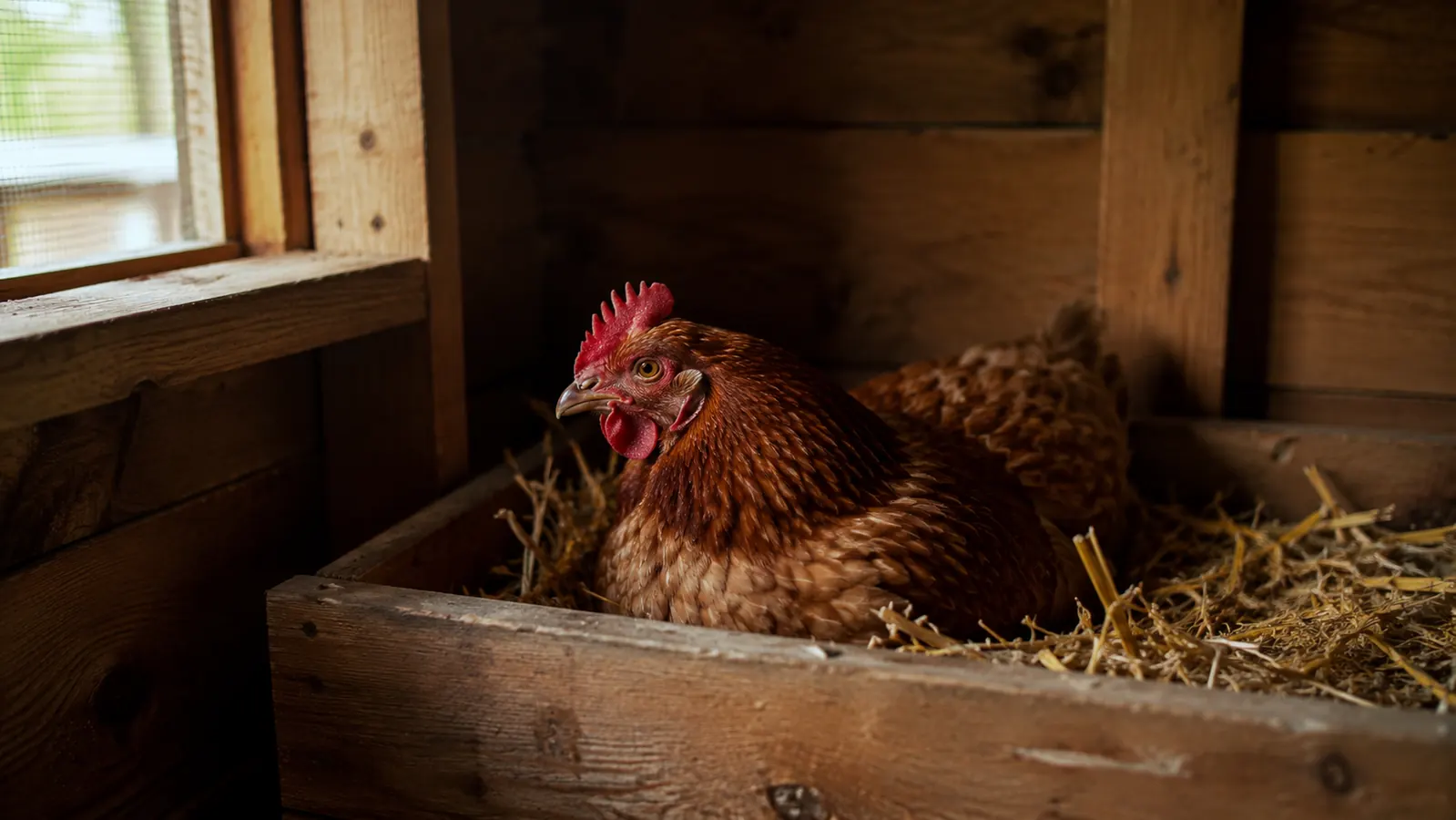
The Aivituvin puts its nesting boxes at a height you can open standing, without dropping to a knee in the mud. When gathering eggs is easy, you do it every morning instead of putting it off, and that is how you catch a broody hen or a cracked shell early. A proper lidded box with clean straw beats a catch-all corner every time. Our girls took to the boxes on the first afternoon, and I have not found a floor egg since.
It Slides Onto Fresh Ground When the Mud Gets Deep
The whole coop rides on runners, so you can drag it to fresh ground in a few minutes. When one patch turns to mud, I give the Aivituvin a shove, and the hens get clean grass while the old ground recovers. A flimsy run does not move, so the dirt under it turns to soup by midsummer and stays that way. Moving coop and pen also breaks the worm and parasite cycle, because you are not penning the birds over the same heavy soil season after season.
Clean-Out Is Ten Minutes Instead of an All-Morning Chore
A solid floor and a wide-opening door mean I can rake out the shavings and slide in fresh bedding before my coffee goes cold. When the coop is the quick part of the morning, you actually do it daily, and a daily clean-out is the difference between a healthy flock and one with respiratory trouble you only notice when it is serious. I timed it on a wet morning: under ten minutes, start to finish.
Fewer Drafty Corners Mean Fewer Frostbitten Combs
In a wire run the cold is everywhere at once and there is nowhere to get out of it. In the Aivituvin the birds have a draft-free corner to huddle into, and that shows on the combs and wattles of the larger breeds when winter sets in hard. Frostbite on a comb is not just ugly, it can cost a bird an entire egg-laying season while she recovers. Keeping them out of the wind is the free, sensible way to avoid that, and it is exactly what solid walls are for.
It Looks Like a Real Part of the Yard, Not a Tarped Mistake
I spend more time looking at my coop with coffee in hand than I like to admit, and a coop you can look at without wincing is one you will actually keep up. The Aivituvin is grey wood with clean lines and a proper pitched roof, so it sits in the yard like a little barn. When it looks like a building and not a project, you seal the small spots and sweep the run, and that upkeep is what keeps a wooden coop sound for years.
It Gives a Predator One Solid Wall to Contend With
Wire is only as strong as its weakest corner, and a dog or raccoon will find that corner by morning. Solid wood gives a determined troublemaker a whole wall to contend with instead of a single panel seam. Nothing is predator-proof forever, and I still walk the pen at dusk and latch the door before dark. But the Aivituvin raises the bar high enough that most of the four legged visitors who checked our place sized it up and moved on to easier pickings.
It Raises the Birds Up Out of the Standing Water
The whole structure sits up off the ground, so the hens stay out of standing water even in the wettest stretch, and their feet stay noticeably cleaner. Dry birds with clean feet get sick less, and that is the quiet benefit of a raised wooden floor. It also gives you a dry spot underneath to lean a shovel against out of the rain, a small mercy you only appreciate in February. It is a detail you notice every single day.
What I'd Skip
If you only ever keep two hens in a warm dry shed you already own, you may not need a purpose-built coop at all, and I will not talk you into one. And a wooden coop is not a fortress: a hungry raccoon can still get a leg in if you leave the door open, so you still walk the pen at dusk and check the latch. But for anyone keeping four to six birds through a real run of weather, a proper wooden coop is not extra. It is the part you do not regret.
A January rain soaked my first run's bedding for a week straight. A solid wooden coop has sat dry through every storm since, and half the daily work left with the wet shavings.
If I had to boil all ten down to one sentence: a real wooden coop trades a little money for a lot of mornings. You trade a soggy bedding run and a midnight trip to check the latch for a coop that sits dry, stays warm, and shuts tight. Every reason on this list showed up in our first year, most of them in the first wet week.
The Coop That Made Mornings Easier All Year
If your flock is still in wire and a tarp, a real wooden coop is the upgrade that pays for itself in saved bedding, calmer birds, and a latch you can trust at dusk. See the Aivituvin and check its current price on Amazon.
Amazon Check Today's Price on Amazon →