
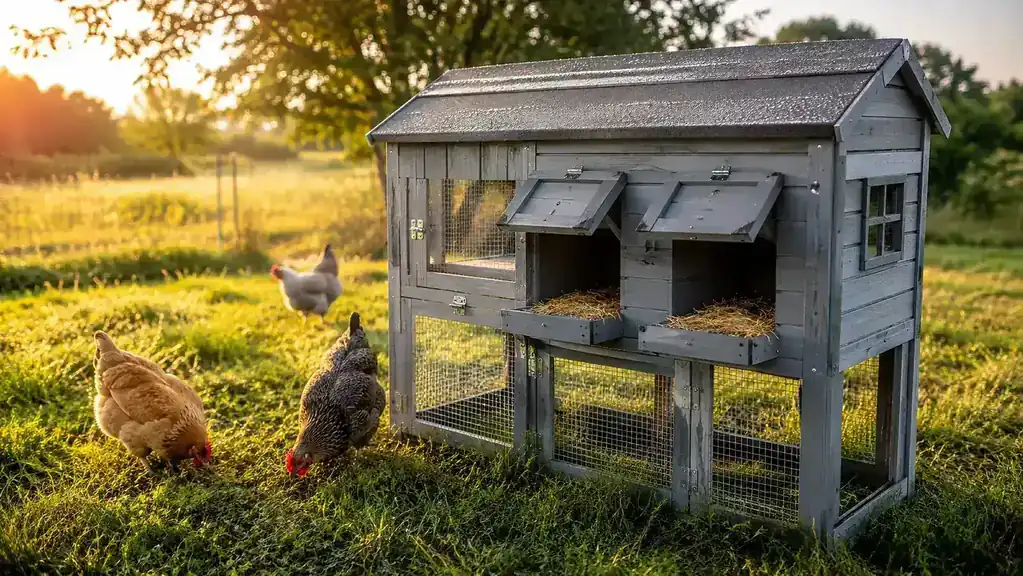
The first coop we put in was cheap and it showed. Pine panel with a wire run that sagged after one winter. Every big rain meant the bedding soaked through, and I got sick of stripping out wet shavings with a pitchfork at six in the morning, muttering things I won't repeat in polite company. My boots squelched on the floorboards by spring, and the hens started roosting on the highest perch they could find, as if the damp bothered them almost as much as it bothered me. I had read enough about what a real coop should be, and the Aivituvin name kept coming up in every keeping forum, but I was not ready to spend the money yet.
Then the raccoon found it. Not the wire itself, it clawed the corner where the frame had rotted and bent a panel back like a sardine can lid. Nobody got hurt that night, thank the Lord, but I sat up the rest of it with the porch light on and a flashlight in my lap, reading raccoon tracks in the mud by the run. I knew that if I didn't do something, I'd be having that same conversation with myself again before the leaves turned.
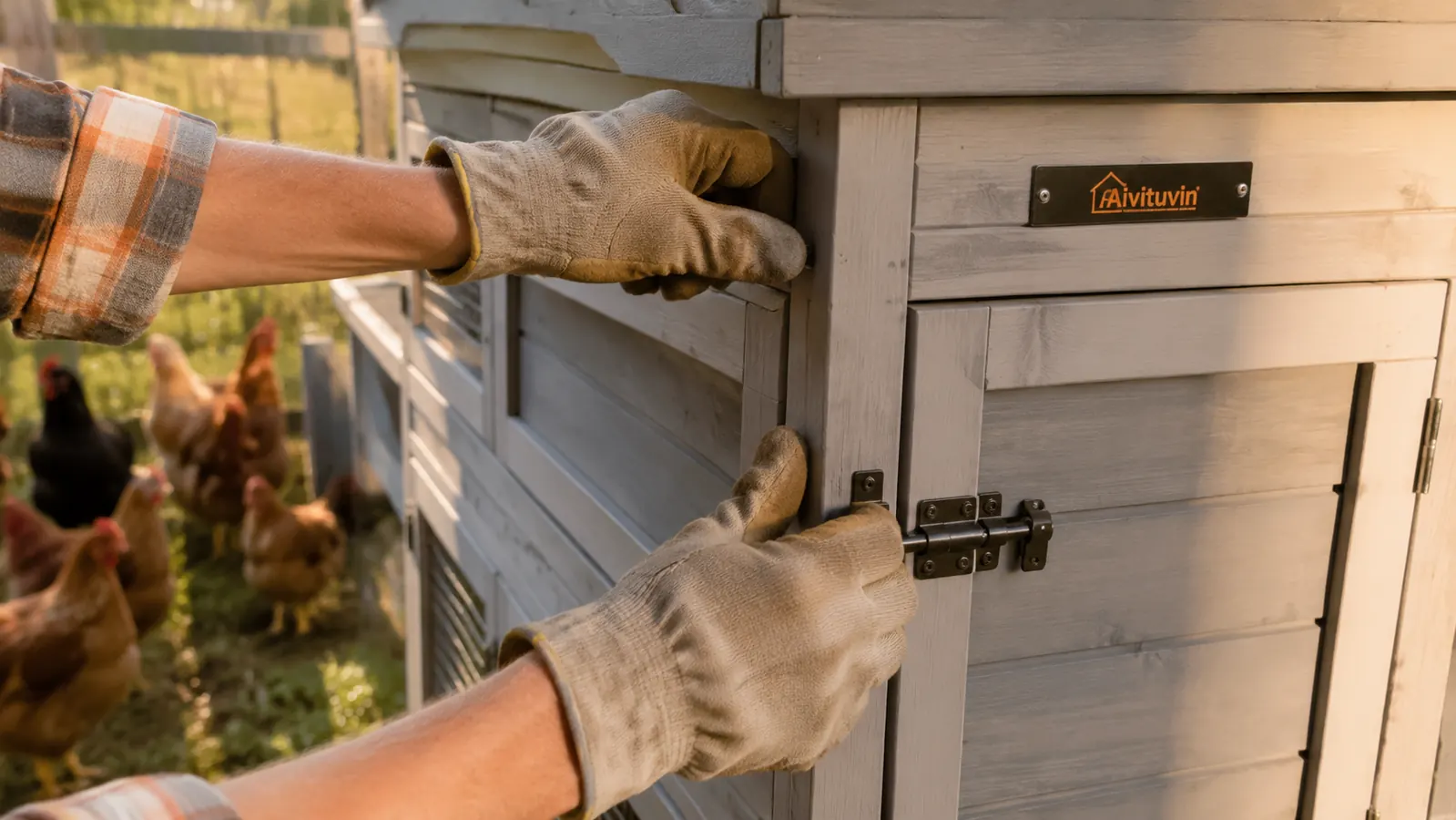
That is when I stopped patching and started over. I wanted one coop that would outlast the weather and the predators both, and I wanted to stop chaining my whole morning to a soggy perimeter. My neighbors run a dozen different brands, but I kept coming back to the Aivituvin wooden coop that a friend up the road had put in three years earlier and never once complained about. She said the biggest thing she'd noticed was that she'd stopped thinking about it.
The Aivituvin I settled on has two nesting boxes, which for my dozen hens means nobody waits in line, and a solid frame that meets square instead of leaning against the wind. The roof sheds water instead of soaking it. Those two things sound small until you have spent a Missouri February with your fingers going numb and a sky that will not stop. I picked the grey finish because it hides the dust, but they make it in other shades if that matters to you.
The real test came the week of the big rain: I went out expecting to muck out a swamp, and the pine shavings were still dry enough to leave on the floor.
The Coop That Stopped the Soaked-Bedding Mornings
After a year and a half of rain, wind, and one persistent raccoon, the Aivituvin wooden coop is the gear I would buy again without thinking. Check today's price for the 4 to 6 bird model before you patch one more sagging panel.
Amazon Check Today's Price on Amazon →Fast forward a year and a half, through two Missouri winters and a spring of sideways rain. The bedding in the Aivituvin stays dry. The corners where the raccoon used to work are still solid, no soft wood, no new gaps. When I walk out first thing to let the hens down, I am not holding my breath anymore. That used to be the part of the day I dreaded, and now it is the part I look forward to with a cup of coffee in my hand.
Assembly was an honest afternoon with a second pair of hands. Two of us had it standing by lunch, and a third person would have made it quick. Most of the parts went together the way the diagram said, and the ones that didn't were a washer and a screw orientation, not a fight with the wood. I'd rather have that kind of afternoon once than patch corners every single fall, which is what the old coop was starting to cost me.
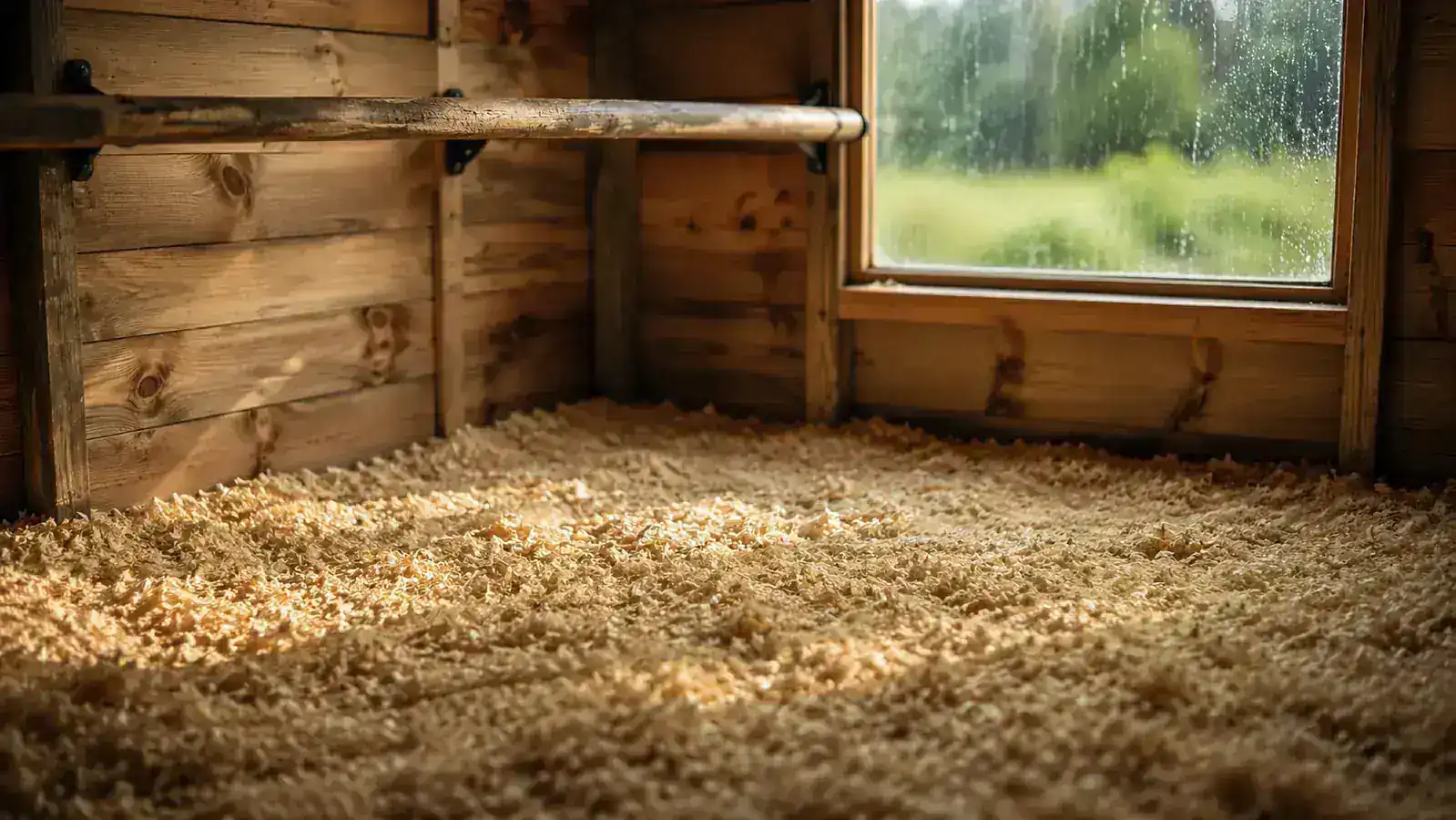
The hens took to it faster than I expected. They stopped bunching in one corner the way they did in the old sagging run, and they started using both nesting boxes instead of fighting over one. Egg production held steady through the cold months instead of dropping off the way it used to. I don't give the coop all the credit, weather and feed do their part, but a dry, even house makes a difference in a flock and I've seen it in ours.
When the first snow came that year, I remember walking out and finding the roost bar dry under the roof, the whole house holding its warmth better than I expected. The dogs followed me down to the barn like they always do, and for once the routine felt easy instead of like a chore I was behind on.
Is it perfect? No. The ramp is a little slick on a wet morning and I have learned to scatter a handful of scratch on it so the birds get traction. And it is not a barn, so on the worst nights I still close the pop hole myself even though the birds are safe inside. That is just good habit, not a criticism of the build. Nothing I keep outside is ever truly hands-off, and I'd be suspicious of anyone who promised that.
What I'd Tell You If We Were Sitting at My Kitchen Table
If you are still patching a sagging run and stripping wet bedding, I'd tell you the same thing my friend told me: stop fighting a coop that was never going to hold up, and buy the one that will. You don't need the biggest model on the market, you need one where the wood meets square, the roof sheds water, and a raccoon can't bend a corner back with his paw. The Aivituvin does all three, and a year and a half in, it is the quietest part of my morning. I'd rather you learn that from my porch and my pitchfork than from your own cold, wet one.
Give Your Flock a Dry, Raccoon-Proof Home
If your mornings are still start-of-day repairs and soaked shavings, this is the coop I'd start with. See today's price for the Aivituvin wooden coop and put the patch-and-pray routine behind you.
Amazon Check Today's Price on Amazon →