
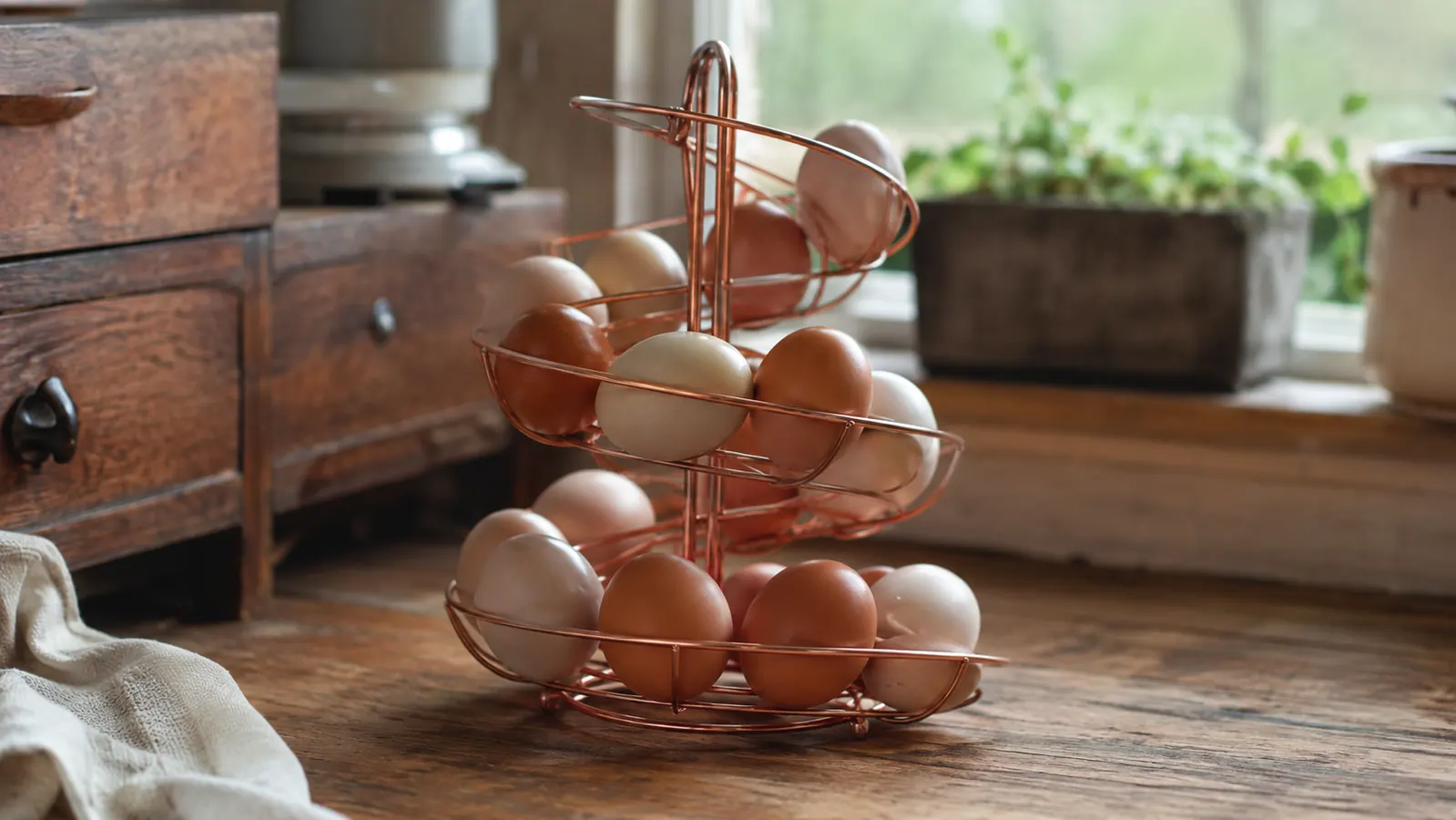
Every chicken keeper runs into the same fork in the road about three weeks after the first egg shows up: do you leave the day's haul on the counter in one of those spiral racks, or stack it all in the fridge like your grandmother did? I've done both for years, with a dozen hens dropping anywhere from none to twelve eggs a day depending on the season, and the honest answer is that they are not the same job. The short version: unwashed fresh eggs that you plan to eat within a few weeks belong on the counter in a Toplife skelter, and washed eggs, or eggs you won't get to for a month, belong in a carton in the fridge.
Neither way is wrong. The mistake is treating them as interchangeable and shoving every single egg into the fridge out of habit, or leaving washed eggs out where they'll go bad faster than they should. So let me lay out what each storage method actually does, when I reach for each one, and why I keep both in my kitchen at once. I'll be specific about the how, not just the what, because the difference between good eggs and bad eggs is almost always a storage decision made a week earlier.
| Toplife egg skelter (counter) | Fridge carton | |
|---|---|---|
| Ongoing cost | One-time rack, zero ongoing cost | Reusable cardboard carton, cheap to replace |
| Capacity | 18-20 unwashed eggs on the spiral | A dozen per carton, stackable |
| Storage life | Several weeks on the counter, unwashed | Months in the fridge, washed or not |
| Egg rotation | First-in-first-out by design (oldest rolls out first) | Only if you flip the carton; easy to lose track |
| Space taken | Sits on the counter, takes up footprint | Hides in the fridge door, out of sight |
| Best for | Fresh eggs you'll eat within a few weeks | Washed eggs or long-term storage |
Where the Toplife Wins
The biggest reason I reach for the Toplife skelter every single morning is that it fixes the forgetfulness problem. Fresh eggs kept unwashed on the counter have that protective bloom on the shell, the natural coating that keeps air and bacteria out, and they stay good at room temperature for a couple of weeks without issue. That is not a myth and it is not a kitchen hack. The bloom is a thin, barely visible film the hen lays down as the egg leaves her, sealing thousands of tiny pores in the shell. As long as that film stays dry and intact, the egg is sealed off from the world. The moment you wash it, the film is gone and every one of those pores opens back up. So the counter method depends entirely on eggs that have never touched water, and that is the first thing I check before I load the rack in the morning: are there any dirty ones that need to come out and be washed?
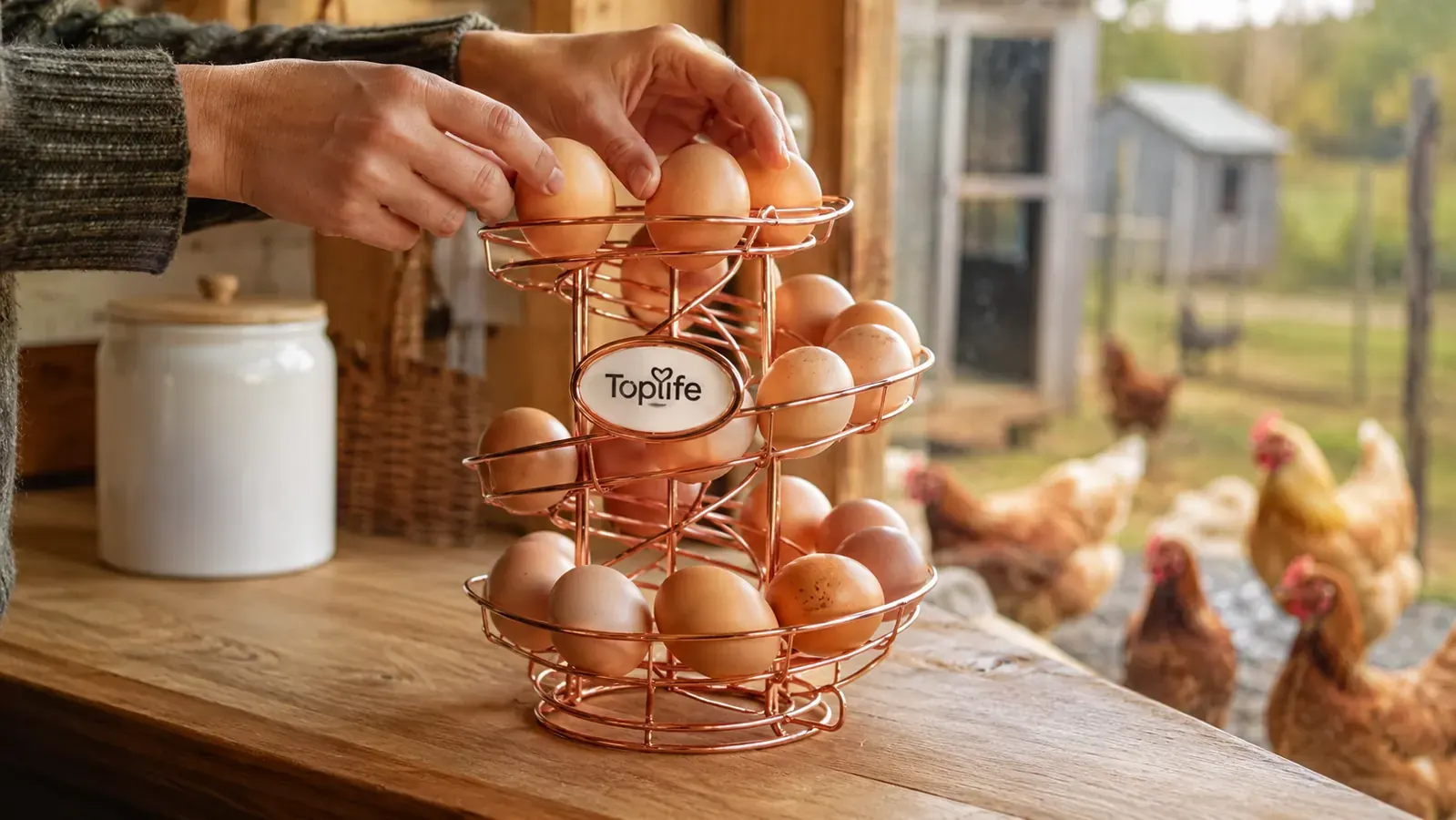
But even with the bloom doing its job, the whole trick falls apart if you can't remember which dozen came first. The spiral rack solves that without you doing a thing: you load new eggs in the top and the oldest ones roll down and out the bottom first. First in, first out, every time, even when you're half asleep at six in the morning. The skelter, and the Toplife one is a nice solid metal version of the idea, is essentially an automatic rotation system sitting on your counter. You never have to puzzle over which egg is oldest, because gravity already did the sorting for you. That one mechanical detail is worth more to me than any shelf-life number, because it means nothing ever hides in the back waiting to go bad.
The second win is that the eggs get eaten. This is the part nobody puts on the box, but it's the part that matters. When a dozen fresh eggs sit in a bright rose gold rack right on the counter where you crack eggs for breakfast, they disappear. When they sit in the back of the fridge behind a jar of pickles, they turn into science experiments that you discover weeks later with a sad little air bubble and a whole lot of regret. Toplife makes it a one-piece metal frame that holds around eighteen to twenty eggs, so you can see the whole harvest at a glance and use what's freshest first. There is a real argument that the counter rack does as much for a small kitchen as it does for the eggs themselves: it keeps the harvest in front of you, and out of sight is out of mouth.
Where the Fridge Carton Wins
I'm not here to pretend the fridge doesn't have its place, because it does, and it's the right place for a big chunk of what a real flock produces. If you wash your eggs, which you should only ever do right before you eat them, that protective bloom comes off the shell and the egg needs cold storage from then on. Clean water on an egg shell is porous enough to let bacteria through, so a washed egg left on the counter is asking for trouble. Every washed egg goes in the fridge, no argument, and there's nothing a skelter can do about that. The colder the better for a washed egg, because once the bloom is gone the only thing standing between the yolk and the bacteria is refrigeration.
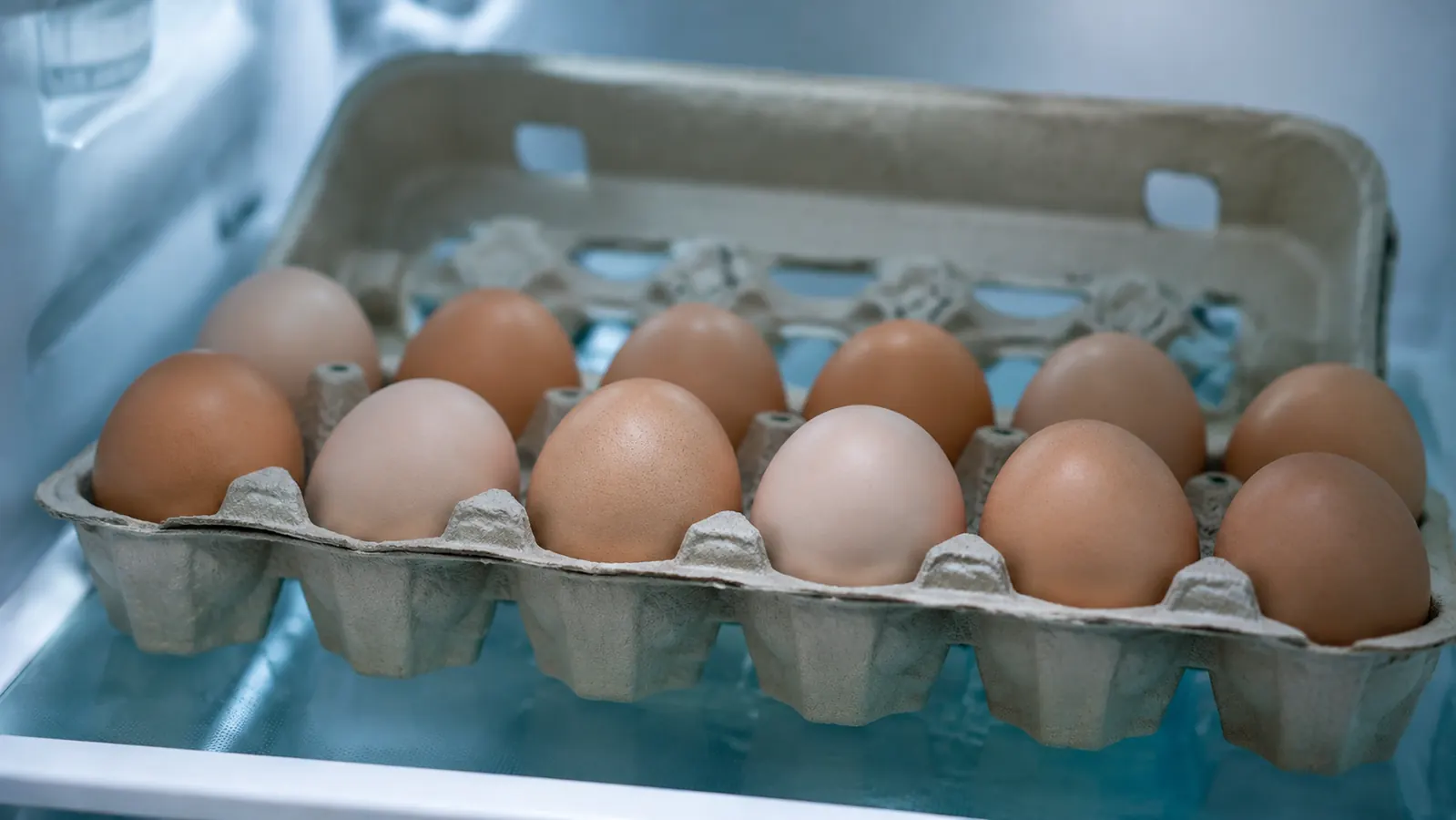
The fridge also wins outright on sheer staying power and space efficiency. A carton holds a dozen eggs, it stacks neatly in the door, and it will keep eggs good for months, which matters in the spring when the hens are laying like it's a paid job and you have more eggs than any kitchen could possibly use. My spring glut goes straight into cartons in the fridge, and I'll still be cracking those in August. You cannot get months of shelf life out of a counter rack, and trying to freeze or can a skelter-full just gets silly. Cold storage slows the aging of an egg dramatically, and there is no way around that basic fact.
Let me tell you what the fridge is actually good at, day to day. It is good at baked goods, because bakers want cold eggs anyway and a carton that lives in the door makes them easy to grab. It is good at holding overflow when the counter rack is full and the girls are still laying. It is good for anyone who eats eggs on a schedule, like a household that goes through a dozen every Sunday for breakfast and has the next dozen already waiting. And it is the only safe home for any egg whose shell got cracked or washed. The fridge is the workhorse of long storage; the skelter is the champion of daily eating. They are not competitors, they are teammates.
Make the daily eggs actually get eaten
If you're pulling fresh eggs out of the coop every morning and they keep going to waste in the back of the fridge, a counter skelter is the fix that works without you remembering to do anything. Load the new eggs on top and the oldest rolls out first, every day. It turns a forgetful habit into a reliable one.
Amazon Check Today's Price on Amazon →The bloom keeps an unwashed egg safe on the counter for weeks, and the spiral rack makes sure the oldest one rolls out first, and those two facts together mean fresh eggs finally stand a chance of getting eaten instead of hidden.
How I Actually Split the Harvest
It helps to see the routine written out, so here is exactly what I do most mornings through the laying season. I take the basket out to the coop around seven, wipe any dirt off the clean eggs with a dry rag, and set everything that came out of the nests onto the top of the skelter. Anything that had a mud fight with a hen, or that I cracked against the basket, goes straight into a bowl by the sink to be washed and used within the day. By midweek the skelter is full of the freshest layer of the harvest, and the ones below it, the ones from Monday and Tuesday, are rolling out the bottom into my hand when I want to cook.
The overflow works differently. Once the skelter is topped off and the girls are still coming through, the rest never touch the counter. I date the cartons with a permanent marker, oldest week written on the top, and stack them in the fridge door in order, newest at the back. Then when I pull a carton out I take it from the front, so the oldest eggs go first there too. The counter rack manages the next week of eating, and the cold cartons quietly hold the surplus for August. Same first in, first out idea, two different tools, and neither one does the other's job.
Who Should Buy Which
Buy the Toplife skelter if you have a small to medium flock, you gather a handful of clean unwashed eggs a day, and you actually want to eat them. It's also the right call if the whole reason you keep chickens is to stop buying store eggs, because the sight of a full spiral on the counter changes how you cook. You'll reach for an egg you otherwise would have ignored, and that is the whole point of keeping birds in the first place.
Stick with the fridge carton if you have a big flock and more eggs than you can eat in a few weeks, if you wash your eggs, or if you mostly bake or batch-cook and go through eggs on a schedule rather than a whim. The cleanest setup, and the one I actually run now, is both: the next few days' eggs in the skelter for eating, the overflow cartoned and refrigerated for later. A skelter doesn't replace my fridge, it just earns the freshest eggs a place where they'd actually get used. If you only keep a handful of hens and eat most of what they give you, you may never need more than the rack.
What I'd Tell a First-Time Chicken Keeper
If you're just starting out, don't overthink the storage question before you even have your first egg. Collect them, wipe off anything gross with a dry cloth, and leave them unwashed on the counter in a bowl for the first couple of weeks while you figure out how many eggs you actually go through. If they keep disappearing, great, keep doing what you're doing. If you start tripping over surplus, that's the moment the skelter earns its keep, and the moment a stack of cartons in the fridge starts to make sense. Let your own kitchen tell you which one you need, because it's different for every flock.
And one honest note: a skelter holds around twenty eggs, so it's sized for a small household flock, not for running a roadside egg stand. If you're selling eggs or feeding a crew, the carton and the fridge are your real workhorses and the rack is just a pretty convenience. Know what you're buying it for before you hand over the cash, and you'll be happy with it instead of disappointed. Test your own flock's pace first, then let the storage decision follow the reality of your kitchen.
Set your daily eggs where you'll actually use them
For a small flock and a kitchen that wants those eggs eaten, the Toplife egg skelter is the way. Unwashed fresh eggs stay good on the counter for weeks, the bloom does the protecting, and the spiral keeps the oldest rolling out first without you tracking a thing. Check today's price on Amazon and let the daily harvest finally get used.
Amazon Check Today's Price on Amazon →