
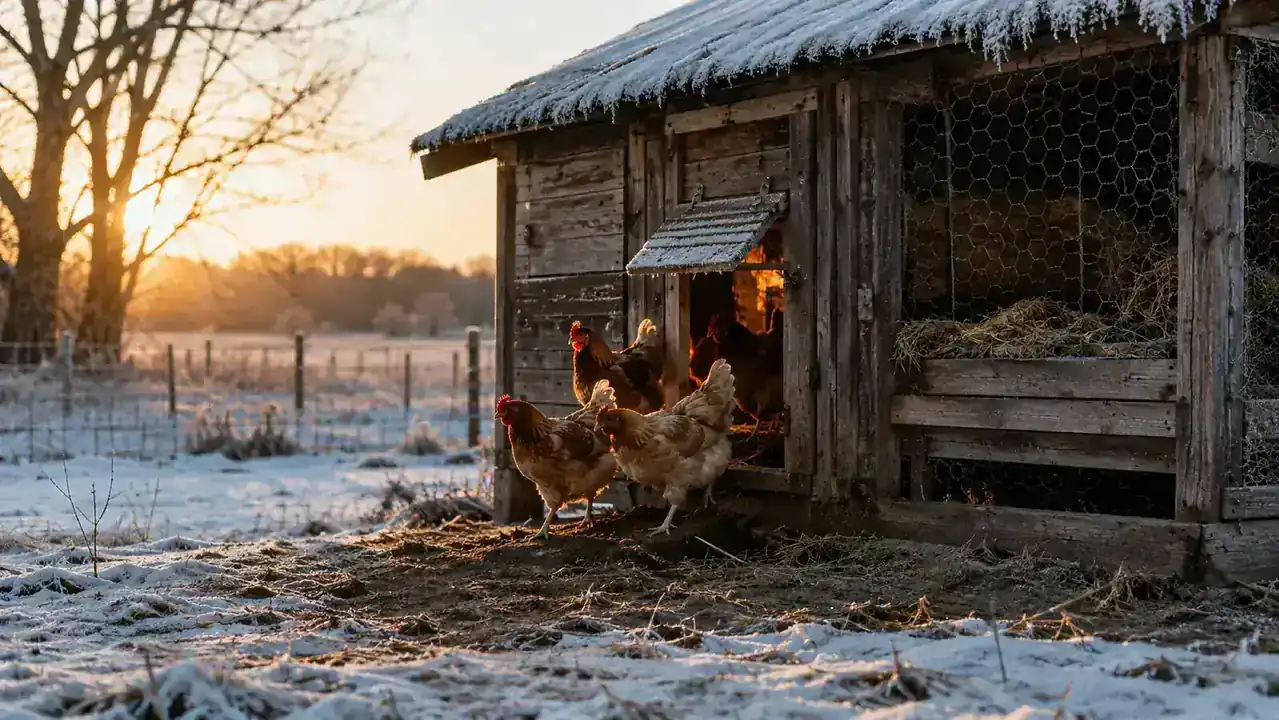
I ran a heat lamp over our roost for five winters, so I'm not going to lecture you from the cheap seats. It was what the feed store sold, what my grandmother used, and what every keep-it-simple video told me to do. Then on the first week of December, around six in the morning on a single-digit night, I walked into the coop and found the clamp had slipped. The bulb was angled down at the bedding, still burning, a foot and a half off the pine shavings. Nothing caught. But I stood in the doorway for a full minute, then went to the house and ordered a flat panel before I even let the horses out.
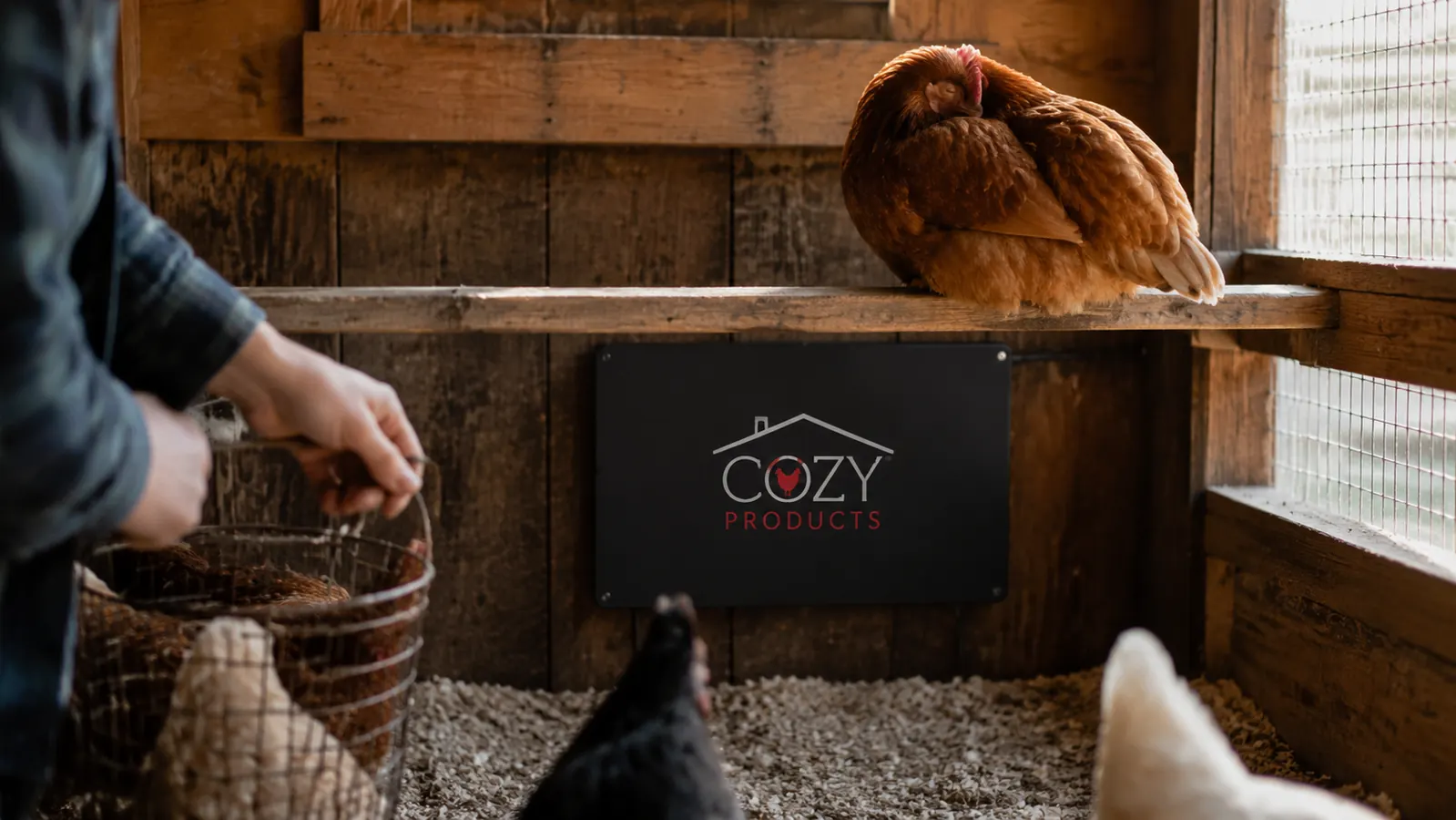
A flat-panel heater is a sealed slab, about 2 inches deep, that radiates heat at whatever is in front of it instead of blasting the air inside the whole coop. The one I've run since that morning is the Cozy Coop from Cozy Products, 150 watts, wall mounted. Here are the ten honest reasons I have not once wished I'd stayed with the bulb.
The flat panel that replaced my heat lamp
The Cozy Coop heater from Cozy Products mounts flush on the wall, draws 150 watts, and has run our coop every night since that December scare. It's the heater I tell first-time chicken keepers to buy before they ever hang a bulb.
Amazon Check Today's Price on Amazon →No bulb hanging over dry shavings
A heat lamp lives in tension with everything a coop is made of: dry shavings, straw, dust, and a draft that can knock a clamp loose. Mine slipped and aimed itself at the bedding, and that kind of morning you only get to count once. A flat panel bolts flat to the wall and radiates from a surface that never approaches anything that burns. There's no clamp, no chain, no bulb over the litter. That one difference is the entire reason I switched.
It warms the birds, not the whole ceiling
A radiator warms air, and warm air lifts and leaks out through every gap under a coop door and every roof vent. A radiant panel warms what is actually in front of it, which is your birds on the roost. On a 9-degree night the hens feel it on their backs exactly where they sit, instead of standing in a room a lamp has only made slightly less cold. Same reason you stand closer to a wood stove across a drafty room.
The surface stays cool enough to touch
After a full night on, I can hold my palm flat against the Cozy Products panel. I would not do that to a heat lamp, and neither would you. That lower surface temperature matters because hens wobble. An unsteady bird that presses against the panel gets a warm wall, not a singed patch of feathers. No feather smell in the coop and no scalded comb from brushing the wrong end of a bulb.
There's no glass to shatter
Every heat lamp bulb I owned collected dust and grime, and hot glass cracking when cold moisture hits it is a real winter risk in a humid coop. The flat panel has no bulb at all. It's a sealed aluminum slab, so there's nothing to crack, nothing to replace, and no filament that picks the coldest night of the year to burn out. I keep a spare lamp in the shed, and this winter it stayed there.
No red glow keeping the flock wired
A heat lamp throws red light across the whole interior all night. Chickens read light as morning, and hens roosting in that glow never fully settle through deep winter. The flat panel gives off essentially no visible light. The coop goes dark at dusk and stays dark, and the birds settle the way they're built to. I noticed calmer, quieter roosting within the first week, and so would you.
150 watts instead of 250
A standard heat lamp draws 250 watts around the clock. The Cozy Coop runs 150. Across a hundred-day Missouri winter that is a real evening-out on the electric bill, and it concentrates heat on the spot the birds actually use instead of hosing it into the whole structure. I did not switch for the pennies. I mention the wattage because it is proof of how little heat is required to do the job.
Two inches deep and out of the way
The panel is 2 inches deep and mounts flush on the wall. No chain, no clamp, no swing. Nothing for a rooster to knock, a dog to bump, or a gust to set swinging, which is a sentence you could never write about my old lamp. Mine lives just under the roosting bar, so the birds roost with it at their backs and the floor stays clear for scraping out in the morning.
The hens rearranged themselves for the warm end
I mounted mine low, and within two nights the flock had sorted itself so the older girls owned the end of the roost nearest the panel. On a 4-degree night you'll find them pressed along it with their heads tucked. That is the proof that matters to me. The lamp kept the air less cold. The panel keeps them warm, and the birds know the difference better than any spec sheet does.
You can leave town without the knot
The old math went like this: I was only ever truly relaxed when the lamp was unplugged. Every trip to town ended with me picturing the clamp. That feeling is gone. I mounted the panel, plugged it in before Thanksgiving, and I leave it running until March. If the wiring ever fails, it fails cold, not on fire. I'll take that trade every single winter, and it is worth more than the panel cost.
It cuts the frostbite risk on the roost
Cold-hardy breeds still take comb and wattle frostbite on the worst nights, and that damage happens while they sleep. Hens that roost near the panel come through January with clean combs because they have a warm pocket to spend the coldest hours in. It will not fix every cold-weather problem, so keep the vents open and the coop dry. But as the warm spot on the roost, it is the difference maker on a zero-degree night.
What I'd Skip
Be honest about who this is not for. If your coop is small, tight, and holds cold-hardy breeds through a mild winter, you may not need any heat at all, and unheated can be the better choice because the birds acclimatize. We lost power for two days in February, and my flock, used to only a warm spot, rode it out fine. Also, the panel warms the birds on the roost. It does not keep the water fountain in the far corner liquid, and if that is the job you want done, you want a heated waterer base instead. And do not buy one expecting a jump in egg production. A comfortable hen is not a laying hen; daylight does that work. For the full picture of what the panel can and can't do, my long-term review covers the whole winter, and the winter-heating guide covers ventilation and water. But if your only problem is a lamp over the shavings, buy the panel.
Within two nights the flock had sorted itself so the older girls owned the end of the roost nearest the panel. That is the proof that matters to me.
Take the lamp down for good
If there's a clamp and a bulb over your roost right now, the switch is a ten-minute job: mount the Cozy Coop panel under the bar, plug it in, and retire the lamp to the shed. Your birds will settle, you'll sleep, and nothing burns.
Amazon Check Today's Price on Amazon →