
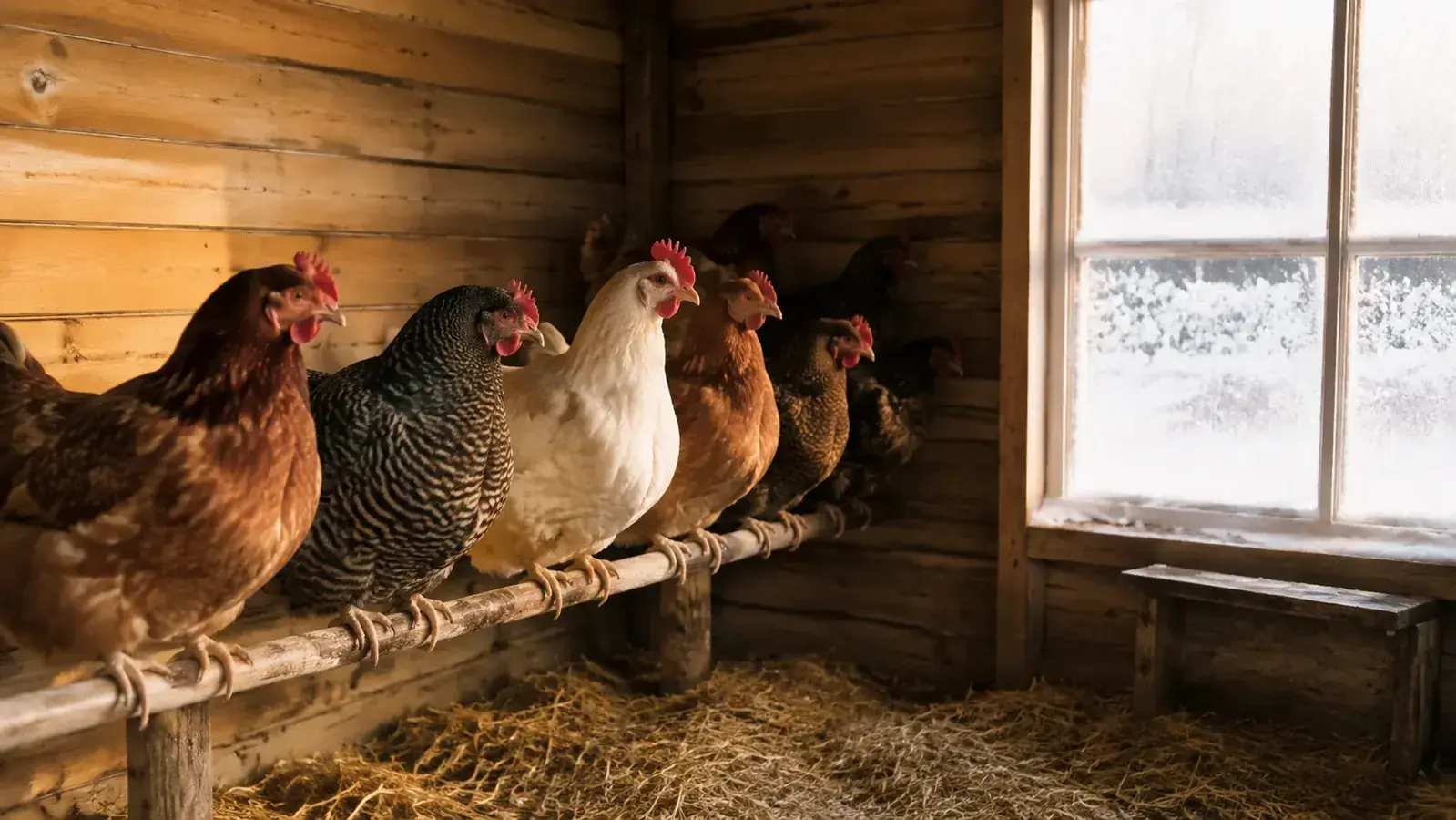
Every November the same question starts circling in the chicken groups, and every winter I give the same answer: you want to warm the roosting bar, not the whole barn, and you want to do it without a glowing bulb hanging an arm's reach from dry shavings. I said that for years while my own coop ran on a heat lamp I kept talking myself out of trusting. Then we had the January scare that finally pushed me onto a Cozy Coop flat-panel heater, and this is the honest long-term read after a full Missouri winter with it, through the nights that hit single digits and the drippy thaws in between.
This is not a write-up of one cold snap. It is a write-up of December, January, February, and the bone-dry cold snaps that dip to single digits in Missouri, on a coop that holds about a dozen birds. The heater is a 150-watt flat panel from Cozy Products, about two inches deep, that mounts flat on the wall or sits free-standing. It does not blast heat at the birds the way a lamp does. It faces the roosting bar and throws gentle radiant warmth at whatever is in front of it. If that sounds like a small job, you have the right idea, and the whole question of this heater is whether that small job is enough.
The Quick Verdict
After a full winter it warmed the roosting area reliably, used a third of the electricity my old lamp burned, and gave me something I did not get from the heat lamp: the ability to sleep through a cold night without picturing the coop catching fire.
Amazon Check Today's Price →Stop trusting a glowing bulb over dry shavings. The flat panel warms the roost and gives you one less thing to worry about at 2 a.m.
After a whole winter, this is the heater I'd buy again without a second thought. It is cool to the touch on the back and edges, it sips power compared to my old lamp, and the hens camp out right in front of it. See today's price and current stock before the cold snap planning starts.
Amazon Check Today's Price on Amazon →How I've Used It
Our coop is a recycled wooden shed, about 8 by 10, with a raised roosting bar down one wall and nesting boxes along the other. In past winters I clamped a 250-watt heat lamp to the rafter above the roost. It worked, in the sense that the birds were fine and the water near the door froze anyway. But I never stopped doing the mental math of a bulb swinging over a bed of shavings, especially after our dog Bonkers knocked over the feeder one night and I came out to find it wedged against the wall directly under that lamp. Nothing caught fire. But I stood there at midnight with a flashlight and did the arithmetic on what would have happened if the timing had been different, and that was the night I started looking at a flat panel.
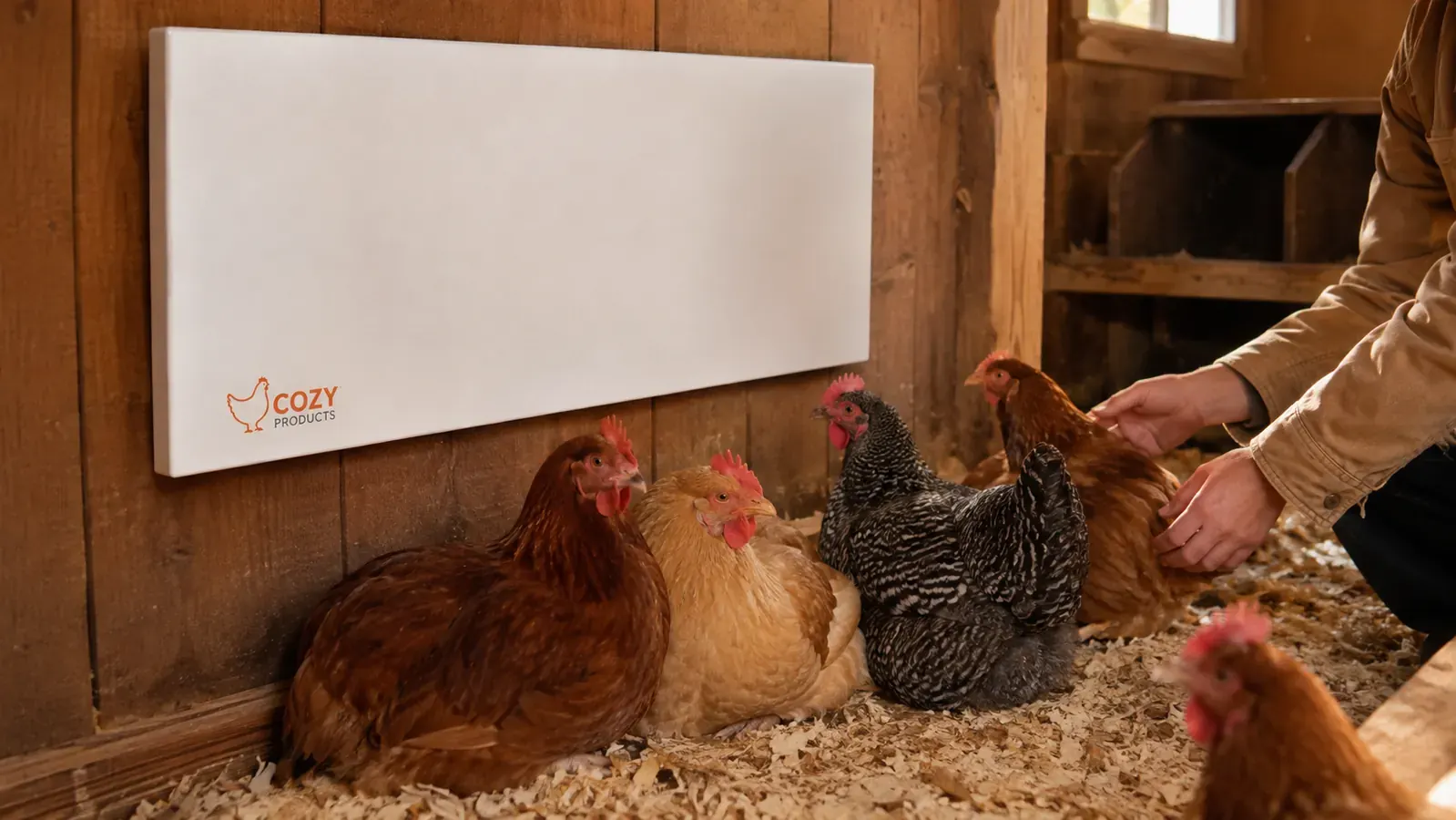
I mounted the Cozy Coop panel flat against the wall, about a foot below the roof and at the height of the roosting bar, using the two included brackets and wood screws into the coop's framing. It took me under fifteen minutes. The panel hangs flush, nothing swings, nothing dangles. It has a short power cord and I run it to a grounded outlet outside, weather-protected at the joint. The cord length meant I had to think about which wall the outlet was on before I committed, and I will come back to that, because it is a real planning detail people miss. For free-standing use you could set it on the floor angled at the roost, but I wanted it out of the way so I screwed it to the wall and left it there all season.
I ran it continuously from about mid-December through mid-March, twenty-four hours a day. That is the honest operating profile for a coop heater in this climate: the coop cools overnight, and the hens pile onto the bar where the panel faces them. The heater has no thermostat, it is a fixed 150 watts, so it is either on or off. That constant draw is worth understanding before you buy, and I will get to exactly what it added to the electric bill in a minute. What it meant for my habits was simple: I stopped worrying about the coop at night. The one task I did every morning warmed the waterer, and I will tell you about that too, because no heater in this size class fixes frozen water by itself.
What It Actually Warms (and What It Doesn't)
Here is the part most listings do not make obvious. A flat-panel heater like the Cozy Coop does not heat the air in the coop the way a lamp or a forced-air heater does. It radiates heat in a cone in front of the panel. The hens standing on the roosting bar directly in that cone get warm. The far corner near the nesting boxes stays cooler. The waterer sitting by the door still freezes over on a hard night unless you deal with it separately. In our shed the panel sat on the same wall as the bar, facing it, and the warm spot was maybe a four-foot pocket of comfort that did not reach the far end of the shed at all.
That sounds like a limitation, and in one sense it is. But for chickens it is closer to what they want anyway. A healthy, well-feathered bird does not need, and honestly should not have, the whole coop kept at a toasty temperature. Keeping the air that warm in winter breeds moisture, and moisture plus cold is how frostbitten combs happen. What a hen actually needs in a cold snap is a warm spot to tuck her feet and a place where her comb does not sit in a draft. The Cozy Coop gives her that spot on the roost, and leaves the rest of the coop at ambient temperature, which is the better outcome for the flock. And because it does not chase you out of the coop with a hot blast, you can leave the vent cracked for moisture without losing the warm spot, which is exactly what we did.
To be concrete: on the coldest morning we had, which bottomed out near zero Fahrenheit, the air inside the unheated part of the coop read mid-teens, and the hens were all sitting right there on the bar in the warm cone, perfectly content. Combs stayed clean and pink through the whole season. Not one bird showed so much as a whitened tip. We kept the ridge vent open a couple of inches all winter, which most people would not do with a heat lamp, because the lamp made them seal the coop up tight to hold the warmth. The flat panel changed that whole trade-off for us, and the drier air was probably as good for the flock as the warmth itself.
On the coldest morning of the year, near zero outside, my hens sat shoulder to shoulder on the warm roost with clean pink combs, and that was the whole point of the heater.
The Electric Bill, Honestly
Cozy rates the panel at 150 watts, which is the whole story when it comes to power. My old 250-watt heat lamp burned about 250 watts, so the flat panel was drawing roughly 40 percent less electricity from the moment I swapped it in. Over a three-month season at the rate we pay here in rural Missouri, running it around the clock, it added roughly the equivalent of a couple of space heater nights to the bill each month. I will say it plainly: it is not free heat, and if you are looking for a way to keep a coop warm with no power draw at all, this is not that. Our bill went up somewhere in the range of a small evening heater run every night, and that was money I was glad to spend once I stopped dreading the barn at night.
What it buys you for that draw is a dramatic drop in the worst-case risk. A heat lamp can start a coop fire when a bird bumps the clamp loose or the bulb tips toward the bedding. A flat panel that is mounted flush and runs cool to the touch on the outside does not have that failure mode. The front gets warm, the back and edges stay cool enough that you can rest a hand on them. For the difference in the monthly bill, I sleep better, and at my age that trade is the whole sale. If you are pinching pennies hard, you can also pick a milder winter or a well-insulated coop and run the panel fewer hours, since the mounting keeps it easy to unplug. We ran it steady because our zero-degree nights came in streaks, but you are not locked in.
The Waterer Relationship
I want to be upfront about the water, because it is the single biggest rookie mistake I see with a panel this size. The Cozy Coop will not keep a galvanized waterer thawed if it sits by the door at the far end of the shed. It warms the roost, not the floor by the entrance. In our coop the waterer lived about eight feet from the panel, and on the hard nights it skimmed over just the way it did with the lamp. So my honest routine was this: I carried a warm jug out with the morning feed and swapped the frozen waterer for the thawed one at midday. That is work the panel does not remove, and no listing you read will tell you that, so I am telling you now.
Some keepers solve it by moving the waterer into the warm cone, right under the panel, and that works for a lower flock that does not mind the water close to the roost. We could not, because our bar is above the space and the geometry never lined up. So I handled water the old-fashioned way and treated the heater as a comfort-for-the-birds purchase. If your whole reason for buying one is to stop carrying water, you want a heated base or a heated waterer instead, and this panel is not that tool. Knowing that boundary before you buy is what keeps the tool an honest one.
Does the Flock Even Notice?
Whether the birds care is the question every keeper asks, and the honest answer is that you can tell. In the weeks before I installed the panel, the hens would bunch up tight on one end of the bar on cold nights and look miserable about getting out of bed in the morning. With the heater in front of the roost, they spread out along the full bar, and the three older hens that always looked stiff in the cold stopped huddling. They still go outside on sunny winter days, they are chickens, but they come back in and plant themselves right in front of that panel like it is the woodstove in the kitchen.
One thing worth flagging: a flat panel does nothing to keep water liquid, as I just said, and it does nothing at all for a bird that is already in trouble. If a hen gets soaked to the skin or goes off her feed, warmth and dry space are only part of the fix, and you still need to get her inside. The panel is a steady, safe baseline of comfort for a healthy flock, not a rescue device. Think of it that way and you will not be disappointed. We lost none of our hens to cold this winter, which I cannot say for the years we ran a loud, hot lamp and sealed the coop against the cold.
Pros and Cons After a Full Season
What I Liked
- Runs cool on the outside and mounts flush, so there is no dangling bulb and a far lower fire risk over dry shavings
- Uses about 150 watts versus my old 250-watt lamp, which showed up as a noticeably smaller jump in the electric bill
- Puts a warm spot right where the birds want it on the roosting bar, and the flock clearly uses it
- Took under fifteen minutes to mount with the included brackets and standard screws
- Survived a full Missouri winter outdoors with condensation and frost without a hiccup
Where It Falls Short
- No thermostat, it just draws a fixed 150 watts, so it is on or off with nothing in between
- Only warms the small cone in front of the panel, not the whole coop, and it will not keep a waterer by the door from freezing
- Fixed cord means you have to plan where your outlet is before you mount it
- It is not free to run, the power draw is real if small compared to a lamp
Alternatives I Considered
The honest comparison is with the heat lamp it replaced, because that is what most of us already have. On price the lamp wins outright, you can pick one up for pocket change, and the bulb replacement is nothing. On every other column the Cozy Coop is the better tool: lower wattage, no swinging bulb over bedding, back and edges that stay cool, and a mounting system that keeps it out of the coop's daily traffic. If your coop is airtight and tiny, a lamp will warm more air for less money, but it will also force you to seal the coop tighter, which is exactly the moisture problem we were trying to get away from.
The middle ground some keepers use is a radiant heat plate, a larger panel hens can lean against like a heated bench. Those work well for groups that like to cluster right against the heat source. The Cozy Coop is lower and slimmer and throws heat a little farther off the wall, which suited our bar setup better. If I had a wide open bar with birds that like to press against the heat, I might have gone with the plate instead. For our coop, the flat panel facing the roost was the better fit, and I would make the same call again. And if you read the comparison we wrote on the Cozy Coop versus a heat lamp, you will see the same numbers I worked out with a clipboard this winter, just laid out side by side.
Who This Is For
This heater is for the keeper who is tired of a heat lamp hanging over dry bedding and wants the birds warm without the worst-case outcome. It is for small to medium coops where you can mount it facing the roosting bar, run a grounded cord, and leave it alone all season. It is for anyone keeping a smaller flock who wants a comfortable, safe winter setup and is willing to still handle the waterer the old-fashioned way. If that is your winter, this panel is a genuinely reliable piece of kit that asks almost nothing of you after the first fifteen minutes. It is the kind of tool that stays mounted and forgotten until spring, and then you take it down, wipe it off, and put it in a box until December.
Who Should Skip It
Skip it if you have a very large coop or a deep freezer of a waterer situation you expect the heater to handle. A single 150-watt flat panel only heats the cone in front of it, so it is not the tool for warming a whole big barn or keeping several waterers thawed at the far end of the building. Skip it if you want zero ongoing power cost, because this draws a steady 150 watts all season. And honestly, skip it if your birds have a huge, well-ventilated space with the roost far from any wall, because the panel needs to sit close enough to face the bar to do its job. For those setups you want a broader radiant plate or a heated waterer base, not a small flat panel aimed at the roost.
If you are done flinching at a bulb over the shavings, this is the winter upgrade that pays for itself in sleep.
A full season on our coop says it holds up: cool to the touch, half the wattage of a lamp, and the hens camp out right in front of it. It mounted in under fifteen minutes and ran every night through some genuinely cold stretches. Check today's price on Amazon and get it mounted before the first hard freeze.
Amazon See the Cozy Coop Heater on Amazon →